















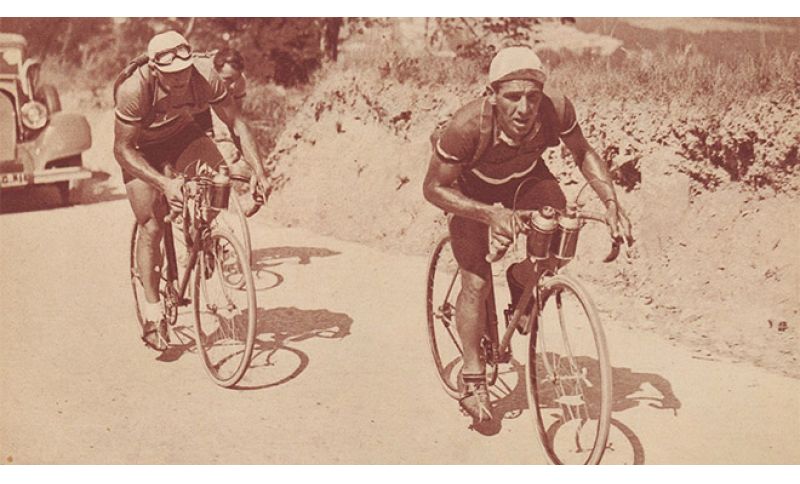
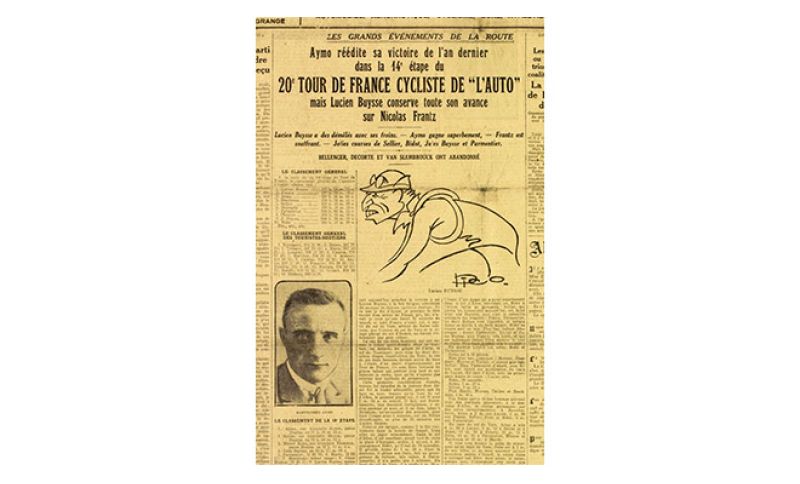
The '20s and '30s: with six Giro d'Italia won during that period (Brunero 3, Camusso, Valetti 2), Turin cycling went through an authentic Golden Era. That golden thread, explored over time by nostalgic journalism and books, was relived during the Grand Depart of the Tour de France and Salida Oficial de la Vuelta, when through two exhibitions ("Les Turinoises" and "Spaniards of Turin") legendary feats were recalled that only apparently might seem minor compared to the Giro's exploit.
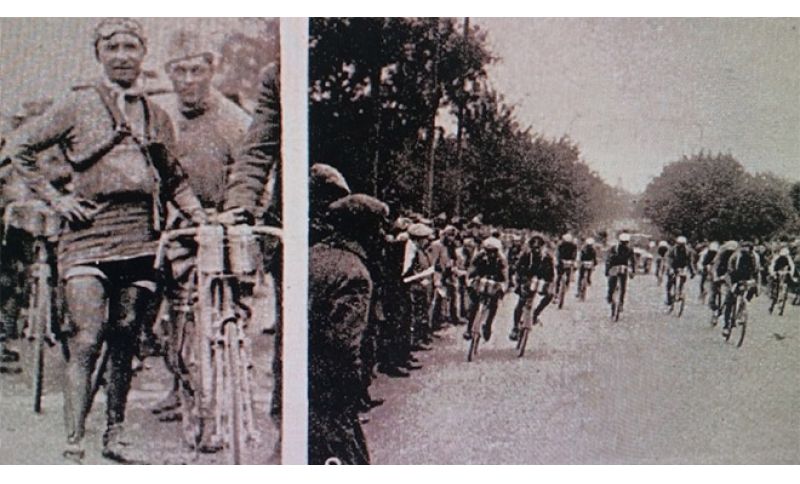
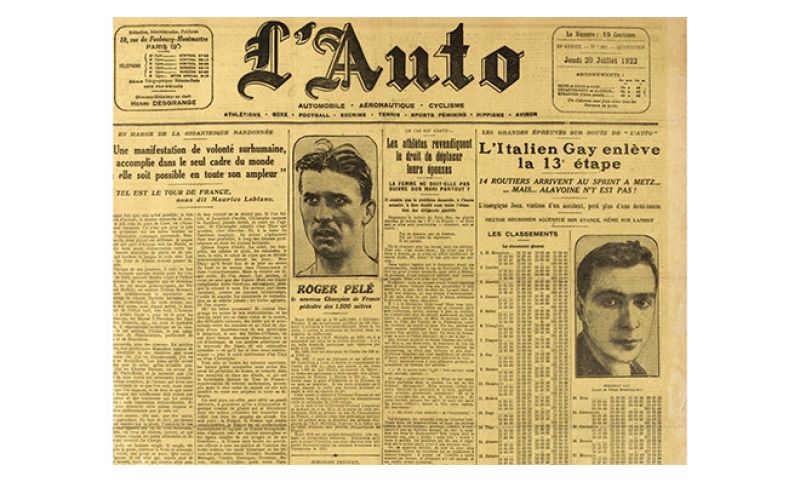
Broadening the horizon to what happened beyond national borders allows us to encounter the great day of Federico Gay, July 19, 1922, on the roads of France. In the photographic report published in Miroir du Cyclisme, the former Turin aviator sneaks to the right of the group of 14 escapees to claim the Strasbourg-Metz stage, which also went down in history with the disqualification of Belgian Heusghem, "guilty" of changing bikes during the race. Gay, not without a polemical tone, when he was sports director of Bottecchia, was severe towards the riders of that time (after the second conflict), remembering in the columns of La Stampa when one would bring the bike to their room. And he also recalled a famous precedent of Learco Guerra: "At the World Championships in Copenhagen, he had received from the Federation the prohibition of bringing the bicycle to his room. Guerra - together with the masseur Cavanna - tied the bicycle with sheets and had it climb up from the balcony side. Then he went to sleep peacefully and won the World Championship".
Certain flagellating excesses, however, do nothing but testify how the practice of comparisons ("ah, in my time") is almost an indispensable must. If Gay's Alsatian feat opened a path, there is the entire series of Turin successes in Nice - Briançon that fascinates. After Brunero's peak in 1924, that stage links in an unparalleled way his name to Bartolomeo Aymo from Virle Piemonte, who as we know was able to suggest even Hemingway in A Farewell to Arms.
And not only that, just read the chronicles of Henri Desgrange on the occasion of the splendid double (1925 and 1926) by a rider who had also arrived late to professionalism, in 1919, after having taken part in the First World War, returning from a five-year period spent in Argentina. "If Aymo had not taken the bad habit, for three years now, of wasting precious time at the beginning of each of his Tours. And if his condition had been better at the start, then he would be the one wearing the yellow jersey" wrote Desgrange at the end of a stage that began in the sun of the Côte d'Azur and ended in the storm of the Alps, with the inhabitants of Queyras distributing rudimentary raincoats to the riders, using oilcloth tablecloths.
Moving to the '30s, among those who deserve just tribute is Luigi Martano from Giaveno, born in Savona but soon transferred with his family to Valsangone, separated by origin from the more famous Camusso (three stages in the Grande Boucle for the first pink jersey) by just 9 km, interspersed with the Colletta di Cumiana. A geographical density of champions that alone frames a golden era for Subalpine cycling. On the front page of l'Auto, commenting on Martano's stage victory in Grenoble-Gap, the "Directeur" Desgrange (he signed as editor-in-chief ten years earlier, but if we don't grant him leadership...) took the opportunity for a long premise about a 72-hour race that took place in 1898.
What did it have to do with the Tour? The rivals of that grueling challenge inspired the founder of the Grande Boucle: "Dedicated to those who say that Magne and Martano will never distance each other. I emphasize this because after just eight stages it would be quite unusual for the two 'bulldogs', however fierce, to remain glued together". Among the fragments of history retraced through foreign newspapers, we must obviously move to the '50s to pay tribute to Angelo Conterno, the first Italian winner of the Vuelta, in 1956. Yet already in 1934 Edoardo Molinar brought the province of Turin to the final podium, wearing the mountain jersey. It was May 14, 90 years ago when stage number 13 brought luck to the cyclist from Rocca Canavese, somewhat overshadowed by the many great Subalpines that the '30s brought to light. At the end of the Cáceres-Zamora of 275km, Molinar preceded at the finish line that Gustaaf Deloor, Belgian, who would have the privilege of wearing the leader's jersey the next day in Madrid.
In that same inaugural Vuelta, Luigi Barral arrived behind the Canavese rider, also class of 1907 like Molinar, a subscriber to honorable placements and therefore somewhat forgotten. But the climber from Meano, a fraction of Perosa Argentina, was second in two stages of the Vuelta, nearly missed the polka dot jersey at the Giro and climbed twice on the Lombardy podium without winning it. Uphill, like Molinar who won a race at Puy De Dome, he was very strong, as the French remember thanks to the 4 peaks of "Barralino" on Mont-Faron. Carneade, who was he? The Manzonian quote is always a bit unfair when it comes to cycling...

 2
2


 2
2


 20
20
8
8
13
13
20
20
8
8
13
13

 Ritratti
 Oscar
Oscar Albi d'Oro

