WORLD CHAMPIONSHIPS IN RWANDA. GREAT APPEAL BUT ALSO MANY PROBLEMS: COSTS, TRAVEL, VACCINES... THE STATE OF AFFAIRS
WORLD CHAMPIONSHIPS | 06/12/2024 | 08:25
di Francesca Monzone
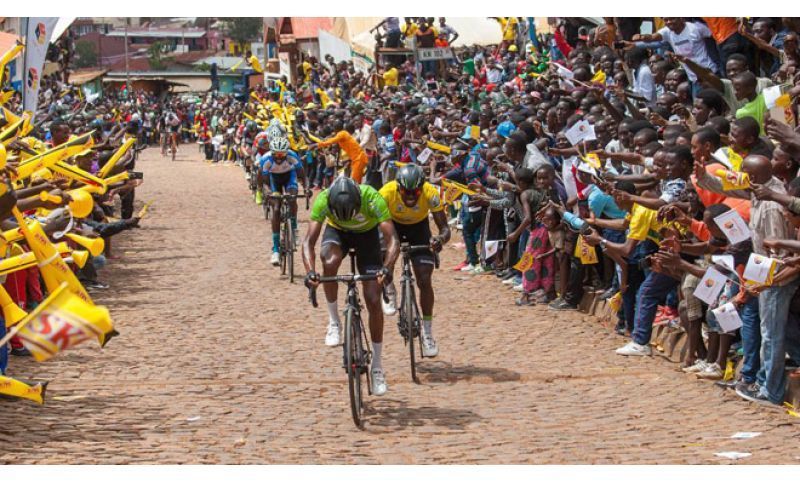
Next year the Cycling World Championships will take place in Rwanda from September 21 to 28, 2025, and it will be the first time that the world cycling event will land on the African continent. It will be a great celebration, but not everyone will be able to participate in this event, and youth categories are at risk due to a trip that risks being too expensive.
The Danish federation has already announced that it will not send junior and under-23 teams due to high costs, and the Belgian federation might also opt for more limited selections, thus excluding the youngest. It seems that hotel and accommodation prices in Rwanda have skyrocketed. The latest quotes speak of 600 euros per night for the period when the World Championship is held in Kigali.
Not only is the Danish federation analyzing various possibilities, but other countries are doing the same analysis. It is never possible to book hotels a year in advance, and this has worked against national teams that have to deal with difficult-to-sustain costs. When World Championships are not held in Europe or the United States, there are always logistical difficulties, and while in Australia there was still the possibility of managing accommodations well, in Rwanda, federations are also obligated to stay in specific areas for security reasons. Moreover, when the cost issue is analyzed in countries with prosperity, the matter becomes decidedly more dramatic in developing nations, with the risk that athlete selection might concern not only age but also gender.
When talking about such important trips, management costs can easily escalate. One must consider hotels, but also the means that will have to be used to move between various race locations. Then there's the transport of bicycles, and in Rwanda, there are higher taxes than in other places for transporting two-wheelers. In fact, transporting one bike per single purchased air ticket is allowed: if you go beyond that number, additional taxes must be paid.
There is also the adaptation issue for a challenging route like the one in Kigali, where riders will find themselves racing at altitudes between 1500 and 1700 meters: this is also an additional cost always borne by the federations. Belgium, in addition to the logistical challenge, has doubts about the mandatory vaccination protocol. There is the malaria problem, which requires taking medication for the entire period spent in Rwanda, and then the vaccine against hepatitis A and yellow fever.
The Belgian federation's doctors are wondering what kind of impact these drugs can have on an athlete's body and if they can cause a lowering of immune defenses. Finally, there is the issue related to the European Championships, which will be held in France just a week after the World Championships in Rwanda. Such close dates might force national teams to organize two separate squads, further increasing management costs. Fortunately, there are still 9 months until the start of the African World Championship, and various cycling federations are trying to balance the books: work is ongoing in many countries to save money where possible and offer athletes of all categories the opportunity to race to win the rainbow jersey.
Copyright © TBW