
























September 12, 2026: the deadline that the MIT (Ministry of Infrastructure and Transport) had indicated to us at ZEROSBATTI and other involved associations to send the response to the request for consultations for drafting the new traffic code. No more than five points, with identified critical issues and solutions, these were the rules to be able to contribute to the formation of the reform.
We will not repeat here the number of accidents, cyclists killed, assaults that we have recorded even this year, too many and in constant increase, and how today the culture is far from that of other European countries, but that there is urgency is now a known fact.
The regulatory and cultural gaps would be far more than five, starting from the obligation to wear a helmet, from the commitment that local territorial authorities should make in cultural change, but also on a practical level, acting on dangerous situations that repeat themselves, such as for example at roundabouts, at turns or during overtaking…
One rule, however, should always apply in every situation: PRUDENCE, which must be doubled and tripled when vulnerable road users are on the road, cyclists, pedestrians and motorcyclists, avoiding any maneuver that could even hypothetically endanger someone's life.
Among all of them we had to choose 5: we propose them to you in a series of articles to facilitate reading, understanding and, if you wish, also debate.
5) SPORTS CYCLISTS: DOUBLE FILE AND CYCLE PATHS
The proposed discipline for the behavior of cyclists contains two profiles that require express and coordinated regulation: the generalized obligation to use cycle infrastructure and circulation in parallel files. Such rules, if applied indiscriminately also to sports cycling practice, may be incompatible with the characteristics of road training and, in certain conditions, even less safe.
For the most part, cycle paths have speed limits between 10 and 15 km per hour, completely incompatible with sports cycling activity, but also due to shared use with pedestrians, dogs on leashes, other cyclists, they generate dangerous situations for cyclists.
Similarly, to give effect to the definition of sports cyclist, the absolute obligation of single file for cyclists outside built-up areas does not consider aspects that are decisive for safety and accident prevention.
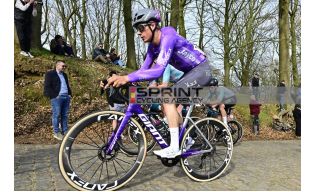
The sport of cycling involves technical aspects such as learning to ride in the slipstream, traveling closely and in a compact and orderly manner, thus reproducing the skills required in competitions.
Single file induces the motorist to overtake even if space is minimal, thus putting the group of cyclists at very high risk, especially if a vehicle were to come from the opposite direction.
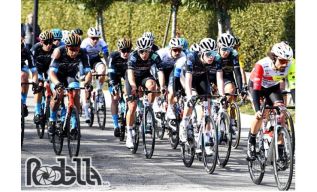
If cyclists were gathered in small compact and orderly groups, arranged at most in two files and without occupying more than one lane, they could reduce the overall length of the cyclist group and the road footprint and make the overtaking maneuver shorter and more readable, with a huge advantage for safety, as already happens in many European countries (for example Spain, France, Belgium, Netherlands, Germany).
It is therefore appropriate to introduce a special discipline for sports cyclists, circumscribed and subordinated to precise safety conditions, avoiding both a generalized privilege and full assimilation to ordinary cycling mobility.
The opportunity to allow double file for sports cyclists outside built-up areas can be summarized in three reasons:
1) The motorist slows down because they have greater visibility of the group and perception, inducing them to slow down, as if they encountered a tractor, an animal cart or any other slow vehicle
2) The greater footprint of the cyclist group forces the motor vehicle driver to wait for ideal conditions to perform the overtaking, first among all sufficient space
3) The overtaking maneuver is faster and safer with advantage for both users
1) EXEMPTION FROM THE OBLIGATION TO USE CYCLE PATH INFRASTRUCTURE
«Provisions that impose the use of cycle paths, cycle lanes or cycle lanes for two-way cycling do not apply to sports cyclists during training or racing activities, when the characteristics of the infrastructure, traffic conditions or speed compatible with sports activity make circulation on the ordinary roadway safer. The obligation to comply with general rules of prudence and not to create danger or unjustified obstruction to traffic remains firm.»
2) DOUBLE FILE CIRCULATION OF SPORTS CYCLISTS
«In derogation from the general rule of single file outside built-up areas, sports cyclists may proceed side by side in a maximum of two files, provided that the group does not occupy more than one traffic lane and the side-by-side arrangement does not create, in relation to road conditions, traffic and visibility, a dangerous situation.
The ability to proceed in two files is permitted for small groups of sports cyclists and must be exercised in a way that facilitates, when possible and in safe conditions, overtaking by other vehicles. Cyclists must arrange themselves in single file when concrete circumstances of traffic, visibility or road configuration make side-by-side travel dangerous or prevent the normal flow of traffic.»
The proposal remains subject to clear limits: maximum two files, occupation of only one lane, obligation of prudence and return to single file when concrete conditions require it. In this way, cyclist safety, traffic flow and predictability of conduct are balanced.
DEFINITION OF SPORTS CYCLIST
There is a need for a sufficiently clear regulatory definition of the category, otherwise the exemptions relating to the use of cycle infrastructure and double file circulation would risk being uncertain in application and generating disputes.
The simplest and safest thing is to recognize this qualification to subjects registered with the Italian Cycling Federation or Sports Promotion Bodies recognized by CONI.
It would also include amateurs and among these even if not strictly competitive, to whom simplified forms of registration should be reserved, subordinated to the possession of fitness for non-competitive sports practice and adequate insurance coverage for civil liability towards third parties.
The introduction of the figure of "sports cyclist" would constitute a true revolution, since for the first time the legitimacy of this sport would be recognized, never mentioned before by law. It is in fact the only sport that uses the road as a training gym, often coming into conflict with other road users, who culturally do not recognize its legality.
The entire movement would benefit, because the ultimate goal is to educate a population that does not tolerate cyclists, while in this way they would no longer be seen as outlaws on the road, but as recognized athletes who, out of passion or competition or, again, for profession, carry out their sports activity with full right.
5 - end




 Ritratti
 Oscar
 Albi d'Oro


Se sei giá nostro utente esegui il login altrimenti registrati.