
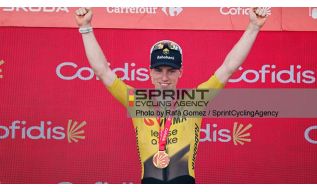
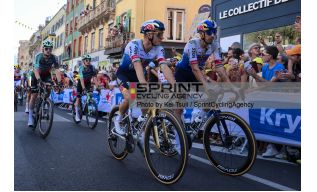














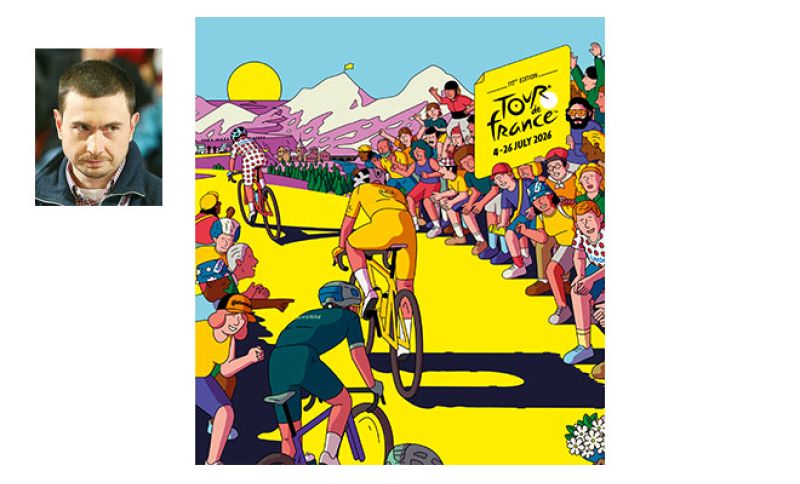
The Tour arrives and you quickly understand why it's the most beautiful race in the world: there's the strongest rider in circulation, the best challenger, the emerging outsider, the most anticipated alternative and the best that the cycling landscape has to offer, not just as general classification contenders. A show that begins in Barcelona, the fourth start from abroad in the last five editions, the 26th in total and also the most southern ever, and concludes in Paris, with the final circuit on Montmartre inherited from the Games that already a year ago delivered spectacle.
A Tour building to a crescendo, as the organization's slogan goes, with a couple of time trials (a 19-kilometer team time trial on the first day, an individual 26-kilometer one) and plenty of mountains between the Pyrenees, Massif Central, Jura, Vosges and finally the Alps with the queen stage on Alpe d'Huez on the penultimate day. A rich race, just as rich is a cast that offers the top sprinters (Philipsen, Merlier and Girmay), classics specialists (Van der Poel and Pedersen above all), plus the best general classification riders. Italy, which has won the Tour ten times in its history (twice with Bottecchia, Bartali and Coppi, once each with Nencini, Gimondi, Pantani and Nibali, the last in 2014), is asked for a good placement (Tiberi and Piganzoli the climbing men) or a stage victory (Ganna, Frigo and Trentin the candidates). Here are the ten faces with the best chances of celebrating on July 26th on the Champs-Élysées.
Tadej Pogacar. He wins because for over a year he's been unreachable for everyone, because after the classics he's returned to his peak, because he wants to write another page of history by equaling those who have won five times. He doesn't win because every now and then bad luck looks even at the best.
Jonas Vingegaard. He wins because winning the Giro takes the pressure off him, because two years after his accident he seems to be back at his best level, because as the phenomenal climber he is, the terrain won't let him down. He doesn't win because getting closer to Pogacar doesn't mean being able to beat him.
Remco Evenepoel. He wins because he's saved himself to the maximum to present himself at his best, because compared to spring he can race without troubles, because he wants to prove he's not just an excellent supporting rider. He doesn't win because compared to the two phenomena he's still behind.
Paul Seixas. He wins because at 19 years old he's not afraid to show his enormous talent, because competing with those who have shared the honors in the last six years is an enormous stimulus, because it's France's best chance to break a drought of over 40 years. He doesn't win because experience carries weight.
Florian Lipowitz. He wins because finishing on the podium at his debut wasn't a fluke, because not having the spotlight on him helps, because going strong on all terrains he always manages to stay afloat. He doesn't win because having Evenepoel as a teammate might not prove to be an advantage.
Isaac del Toro. He wins because he's one of those born to do it, because winning both Tirreno and Dauphiné in the same season is not just a coincidence, because if things go wrong for Pogacar he's ready to be the leader. He doesn't win because whoever races in support of a phenomenon at best aspires to the podium.
Juan Ayuso. He wins because he's a young talent, because he has the ideal terrain to do it, because he finally has the opportunity to prove himself worthy of his former captain Pogacar. He doesn't win because so far the only race where he's found consistency is the Vuelta.
Richard Carapaz. He wins because there are enough climbs for him to compete, because he needs to redeem a year of physical troubles, because of the old generation he's the best at staying with the phenomena. He doesn't win because on the road to the podium there's too much competition.
Tom Pidcock. He wins because the podium at the last Vuelta was a turning point, because he presents himself at the start convinced of making the general classification, because he has the qualities to insert himself in the leading group. He doesn't win because at the Tour you need consistency and he always has at least one bad day.
Tobias Johannessen. He wins because little by little he's reached the highest levels, because in this season he's finished in the top positions in all stage races, because he's one of those who on the climbs is among the last to crack. He doesn't win because he has the pace of a top-ten finisher and he loses time in the time trial.

 11
11


 11
11


 3
3
1
1
9
9
3
3
1
1
9
9

 Ritratti
 Oscar
Oscar Albi d'Oro

