

















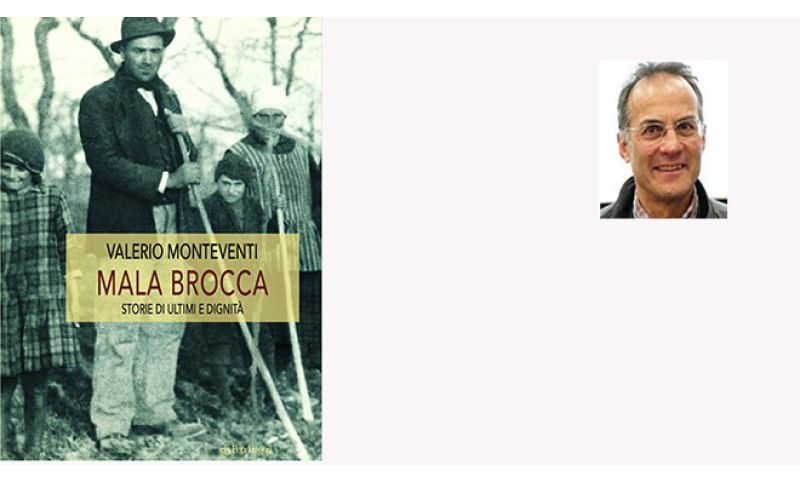
First Coppi and second Bartali. Or first Bartali and second Coppi. Then the others. Rather than finishing fifth or fifteenth or fifty-fifth, the Luisín preferred to finish last. At least that way he would be remembered, perhaps sought out, certainly rewarded. Whatever was available was available: sugar cubes, chocolate bars, black bread, cigarettes, even a few coins, even though back then, in post-war Italy, there were few or no coins around, especially among the people who went to watch races and cyclists pass by. To finish last he had specialized in breakaways in the wrong direction, that is, backwards, but also in punctures and hiding spots. Among other things, writes Valerio Monteventi, "he had a surname perfectly suited to the role of the defeated. It so happened that fate had created the most effective of links between two negative words: 'mala' and 'brocca'. The rest was taken care of by popular imagination and the pen of some clever sports columnist, pairing the black jersey with that 'broccaccio' of Malabrocca".
It is titled "Mala brocca" (Pendragon, 160 pages, 14 euros) the book that Monteventi dedicated to the last and their stories poor in means but rich in dignity. The publication dates back to 2019, but certain stories, especially these stories, endure, perhaps multiply and grow larger, redemption is never economic but ethical. Exemplary stories – the only cycling one is that of the Luisín -, hidden stories, neglected, rejected, erased, stories that make no news nor scandal, stories that struggle to find voices and words, stories that are damnably and cursedly human. "I gave the book the title 'Mala brocca'" – explains Monteventi – "because the stories told in these pages are stories of the last, of shacks, of waters, of rivers and canals, of escapes and expedients to defend oneself from misery, but also of intellectuals, journalists and reporters who have turned their gaze to the margins of society".
Monteventi is one of these. From Bologna, 72 years old, a rugby player for 25 years in the position of prop (and props, you know, go to heaven because they've already experienced hell in the scrums), he's done a bit of everything, from factory worker to athletic trainer, from city councilman to Russian cosmonaut (in a TV series), and he's been very involved with books, as both author and publisher, and with newspapers, from "Mongolfiera" to "Zero in condotta". In the squad of Malabrocca, or rather, of "Mala brocca", here are part the critic, essayist and journalist Goffredo Fofi, the lawyer for the Roma Mario Giulio, the priest of nomads don Giovanni, the photographer of Roma Mario, Bruno Carmini who lived in a hut along the Reno, the Moroccan Hicham who wanted to play football and instead became a boxer until he came to Italy and found his hell, the Romanian Argetran who here made his way and road as a laborer…
"In cycling, as in life, being last is a difficult moral dimension – writes Monteventi -; withdrawal, however, is never the most appropriate thing: you must move forward, show your teeth and not give up. Also because, it's good to know, the feeling of exclusion hurts much more than the lactic acid that makes your muscles sore and locks your legs". So much so that the Luisín was not the kind of cyclist who would abandon the race.



 3
3
 3
2
2
3
2
2

 Ritratti
 Oscar
Oscar Albi d'Oro


Se sei giá nostro utente esegui il login altrimenti registrati.