

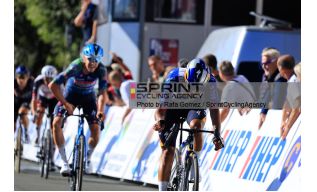















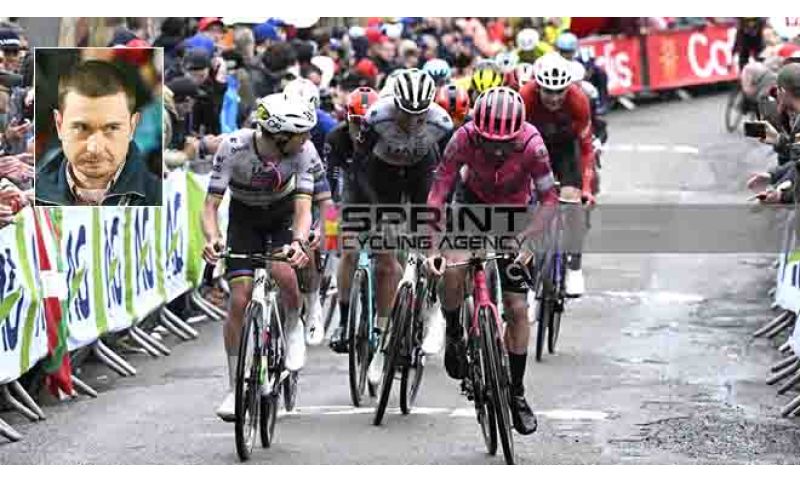
A dress rehearsal for next Sunday's Liège, but the Flèche Wallonne is still a classic that demands respect: this year it celebrates its 90th edition, boasting a palmarès where great names like Coppi, Merckx, Hinault and Pogacar all feature. The route is classic too, covering 209 kilometres between Herstal and Huy with eleven climbs, though only one really matters: the Mur de Huy, 1,400 metres at 10 percent gradient with a 26-degree bend, tackled three times, the last deciding the race. Belgium leads on victories with 39, but Italy is right behind: of our eighteen wins, three have been claimed by Argentin and the late Rebellin, who gave us our last success in 2009. Three victories each for Merckx, Kint and Alaphilippe, but the master of this race is Spaniard Valverde, with five wins. All the big names are absent (Pogacar, Evenepoel, Vingegaard, Van der Poel and Van Aert), Italian participation is reduced (around fifteen riders, with the lively Frigo and veterans Ulissi and Formolo): here are the ten contenders most likely to climb the Mur fastest.
Kevin Vauquelin. He wins because he's one of the best suited to this test, because he's raced it in the last two years finishing second both times, because explosive finishes are made for him. He doesn't win because on the final wall it's not enough to be sharp, you need to seize the moment.
Paul Seixas. He wins because he's destined for it, because this season he's always raced up front, because on a finish like this few have his pedalling ease. He doesn't win because at 19 years old, the price of inexperience in a classic is steep.
Mattias Skjelmose. He wins because he came close three years ago, because at the Amstel he showed excellent form, because he's one of those you shouldn't underestimate on a course like this. He doesn't win because on a steep climb he risks finding more explosive rivals.
Lenny Martinez. He wins because he's approached the Ardennes without overdoing it, because a year ago he finished just off the podium, because he's another who's good at changing pace on the toughest slopes. He doesn't win because he hasn't raced for a month and could lose his rhythm.
Benoit Cosnefroy. He wins because he arrived in the North in perfect condition, because in two days he finished on the podium at both the Brabantse Pijl and Amstel, because without Pogacar he has another chance to race his own race. He doesn't win because someone faster always finds him.
Romain Grégoire. He wins because he's going well, because in his two previous starts here he always finished seventh, because without a clear favourite he can have his say. He doesn't win because he's been racing up front since the start of the season and sooner or later his body will demand payment.
Cian Uijtdebroeks. He wins because he has the qualities for this race, because at 23 he needs to confirm all his talent, because those claiming leadership roles are expected to prove it. He doesn't win because in the North he's only raced one classic and lacks enough experience.
Valentin Paret Peintre. He wins because he's grown gradually this season, because he's one of the less considered riders, because on a finish like this he has good cards to play. He doesn't win because he's never raced in the North and in one-day races he's never been a star.
Tobias Johannesson. He wins because he's a danger that goes unnoticed, because he's been racing well since Tirreno-Adriatico, because in his three previous starts here he's always finished in the top twenty. He doesn't win because there are others who are more explosive on climbs.
Jorgen Nordhagen. He wins because he's one of the emerging talents, because he's already raced this classic a year ago, because he wants to repay Visma's faith in choosing him as leader. He doesn't win because at 21 he still has few major races under his belt.

 12
12


 12
12


 4
4
1
1
10
10
4
4
1
1
10
10

 Ritratti
 Oscar
Oscar Albi d'Oro

