
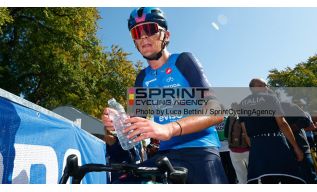
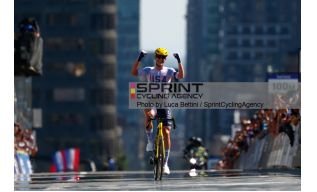

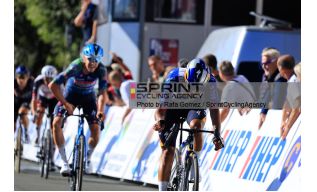














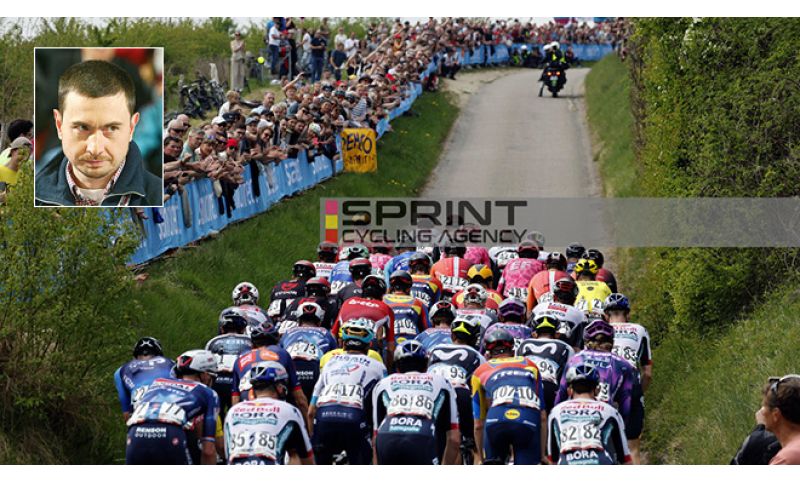
Despite not having the status, the Amstel has nothing to envy from the monument races: a solid tradition, a rich roll of honour, a course that due to its distance (257 kilometres) and difficulty (33 climbs, the wind and narrow Dutch roads) ends up squeezing the legs. First stage of the Ardennes triptych, the beer race this year celebrates its 60th edition, featuring its most iconic climb three times, the Cauberg, packed with enthusiasts, strictly with beer glass in hand from morning onwards: it will once again be the supreme judge, with the final passage just a couple of kilometres from the finish line. In a roll of honour with strong orange tints (18 victories for the home nation against 14 for Belgium), Italy ranks third with seven wins, most of them in the current century, the last one ten years ago with Enrico Gasparotto, the only Italian to achieve a double. Of the recent winners, Pogacar, Van der Poel and Van Aert are missing: here are the ten faces aiming to follow them in the roll of honour.
Remco Evenepoel. He wins because among the Fab Four of cycling he's the only one showing up, because a year ago on his debut he immediately climbed the podium, because courses like this are a springboard for him. He doesn't win because this classic is historically open to surprises.
Mattias Skjelmose. He wins because he's a man for Northern races, because a year ago he struck gold beating Pogacar and Evenepoel, because he's tailored his preparation for the Ardennes tests. He doesn't win because he's no longer a surprise and will have rivals keeping a close eye on him.
Christophe Laporte. He wins because he's perfectly suited to this type of race, because in the North this year he's almost always finished in the top ten, because with the returning Jorgenson he forms a podium-contending pair. He doesn't win because racing as captain isn't the same as doing it in support of a leader.
Kevin Vauquelin. He wins because he's focused heavily on the Ardennes classics, because with a finish like this he has good cards to play, because with Axel Laurance he can exploit team tactics. He doesn't win because in the stage races contested so far he's done well but not very well.
Mauro Schmid. He wins because he's in excellent form, because he's grown steadily in preparation for these appointments, because in a race without a true master he can have his say. He doesn't win because never having entered the top ten of a classic ultimately weighs against him.
Romain Grégoire. He wins because so far this is the classic that's worked best for him, because he's an attacker and on such terrain he thrives, because to live up to his role as France's great hope, placings alone aren't enough. He doesn't win because at the crucial moment he always lacked something.
Andrea Vendrame. He wins because he has the ideal terrain for it, because of the small Italian contingent he's the one who's performed best so far, because he comes from the hills and can benefit from it. He doesn't win because if his teammate Schmid performs well he might find the road closed.
Benoit Cosnefroy. He wins because these are his races, because he's come close once before, because in the absence of captain Pogacar he and the returning Tim Wellens are free to play their own cards. He doesn't win because he gave his best on Friday with the breakaway at the Omloop Het Nieuwsblad.
Simone Velasco. He wins because this is the classic that's worked best for him in his career, because he has the necessary attacking qualities, because with experienced Ulissi he forms a loose cannon pair that can surprise. He doesn't win because there are too many big names in his way.
Alex Aranburu. He wins because he's been racing up front since the start of the season, because he's a fast man who holds well on climbs, because he's often made his mark in the Ardennes classics. He doesn't win because when the going gets tough he lacks something to fight it out to the end.

 36
36


 36
36


 4
4
1
1
10
10
4
4
1
1
10
10

 Ritratti
 Oscar
Oscar Albi d'Oro

