MEALTIME. THE DAY OF REMEMBRANCE ALSO PASSES THROUGH VEL D'HIV, FIVE CURSED DAYS...
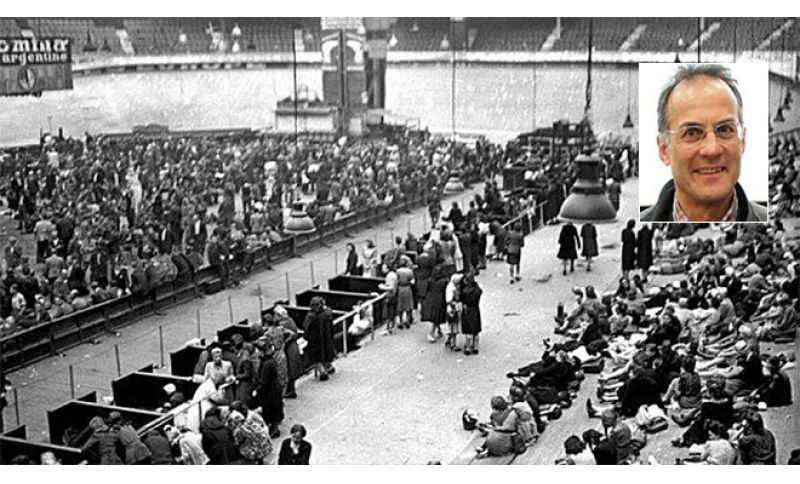
HISTORY | 27/01/2025 | 08:12 di Marco Pastonesi "For years, in front of Coppi and Bartali's wheels, I saw seasons bloom and die" – wrote Mario Fossati in "Repubblica" -: you would exit the Parisian Vel d'Hiv, from the Six Days, and realize that the old boulevard acacias had buds". Vel d'Hiv. Vélodrome d'Hiver. Winter Velodrome. The day of remembrance – eighty years ago today, the Auschwitz camp liberated by Russian soldiers – passes through here as well.It had been built in 1909, and inaugurated on February 13, 1910, at the corner of boulevard de Grenelle and rue Nélaton, on the ruins of the Salle des Machines, erected to host an exhibition during the 1900 Paris Expo, and converted to cycling in 1902 (333.33-meter ring and 20,000-seat stands) and demolished to give more space, light, and view to the Eiffel Tower. The new track, wanted by Henri Desgrange, the creator of the Tour de France, measured 253.16 meters at the cord, but exactly 250 on the stayer line, and the motor-paced trials were the most followed and spectacular (17,000-seat stands). Inside, an area designed as an ice rink, but which could be adapted to other sports, from boxing to – during the 1924 Olympics – fencing, wrestling, and weightlifting. Among the frequenters of the Paris Six Days in the 1920s, Ernest Hemingway:"I started many novels about bike races, but I never wrote one as beautiful as both track and road races are. I will tell of the Vélodrome d'Hiver with its smoky afternoon light and the wooden track with its steep curve inclination and the rustling sound the tires made on the wood when the riders passed, the effort and tactics when the riders climbed and launched, each a whole with his bike, I will tell of the magic of the middle-distance, of the noise of the motors with the rollers on the rear wheel that the coaches drove, wearing their heavy protective helmets and leaning back in their bulky leather suits, to shelter the riders following them from air resistance, the riders with their lighter helmets bent over the handlebars, legs turning the enormous gear and the small front wheels barely touching the roller behind the machine that provided them shelter against air resistance within which to pedal, and the duels that were more exciting than any horse race, the sputtering of motorcycles and the riders elbow to elbow and wheel to wheel up and down around crazy speeds until someone could no longer keep the pace and detached and the compact wall of air against which he had been sheltered hit him". World War II cut France in two parts: Nazi Germany in the north, Vichy Republic in the south. From their agreement, on July 12, 1942, in Paris, 13,152 Jews were "rounded up" and arrested – "la rafle". For each: a blanket, a sweater, a pair of shoes. Almost 5,000 immediately sent to the Drancy transit camp, north of Paris, awaiting deportation to Germany or Poland. The others, 8,160, including children, on July 16 and 17 were crowded and locked in Vel d'Hiv: 4,115 children, 2,916 women, and 1,129 men. Here, under a dark blue painted roof to hide it from bombers, conditions became terrible due to overcrowding and heat. Windows closed for safety, of the ten available bathrooms, five were sealed, a single water tap. Anyone trying to escape, shot on the spot. After five days, the prisoners were deported to the internment camps of Drancy, Beaune-la-Rolande, and Pthiviers, then to the extermination camps. And exterminated.
L’Equipe, specialista in scelte grafiche di impatto, piazza in copertina i grandi tenori, con sullo sfondo ma non troppo i tornanti dell’Alpe d’Huez: “Sur leur 21” è un titolo dedicato ai tornanti mitici ed ai loro attesi protagonisti, che per...
Sulle strade del Tour c’è una new entry che sa di antico: quella della Caja Rural-Seguros Rga. Qui, con la maglia verde e bianca (più spiga dorata), sono passati corridori del calibro di Pello Bilbao e Michal Kwiatkowski, Hugh Carty...
Alpe d'Huez, atto primo. La diciannovesima tappa del Tour de France propone l'arrivo su una delle salite più famose di Francia dove si tornerà anche domani, al termine di un autentico tappone. Ma restiamo all'oggi con la Gap - L’Alpe...
L’articolato e completo ricordo di ieri firmato da Francesca Monzone su questo sito relativo alla tappa di Orcières-Merlette del Tour de France 1971, anno in cui il campione belga aveva saltato il Giro d’Italia vinto poi dallo svedese Gosta Pettersson,...
Numeri, curiosità e statistiche aiutano a rileggere e ad approfondire quel che abbiamo vissuto nella tappa di ieri. Seguiteci: 2: CARAPAZ RADDOPPIAVincitore n solitaria dopo aver scalato la salita di Orcières-Merlette a una velocità media di 23, 4 km/h, Richard...
A soli 19 anni, Paul Seixas continua a stupire il Tour de France 2026. Tappa dopo tappa, il talento della Decathlon-CMA CGM sta confermando di essere una delle più grandi rivelazioni della corsa e, a pochi giorni dall'arrivo di Parigi,...
E’ il 16 luglio 1978, si corre la tappa numero 16 del Tour de France, Saint Etienne – Alpe d’Huez (240, 5 km). In maglia gialla c’è il coriaceo belga Joseph Bruyere, capitano della C & A dopo l’addio...
Dicono che i numeri sono freddi. Eppure, quando si parla di italiani e di successi all’Alpe d’Huez, viene facile l’espressione “Formidabili quegli anni”, che si fosse davanti alla televisione, impegnati nella ascesa in bici più o meno al ralenty (colpa...
I libri sono viaggi. Si viaggia in una storia o in un racconto, in una vita o in un’epoca, con gli occhi e con il cuore, con la memoria o con l’immaginazione. I libri aiutano a viaggiare, e non devono...
Quarta serata di gare ai Gran Premi Internazionali di Fiorenzuola – 6 Giorni delle Rose Bianche, che ha visto assegnare tre prove Elite. Ad imporsi sono stati la bielorussa Palina Konrad nello Scratch Donne, il russo Vlas Shichkin nella Corsa...
Se sei giá nostro utente esegui il login altrimenti registrati.