









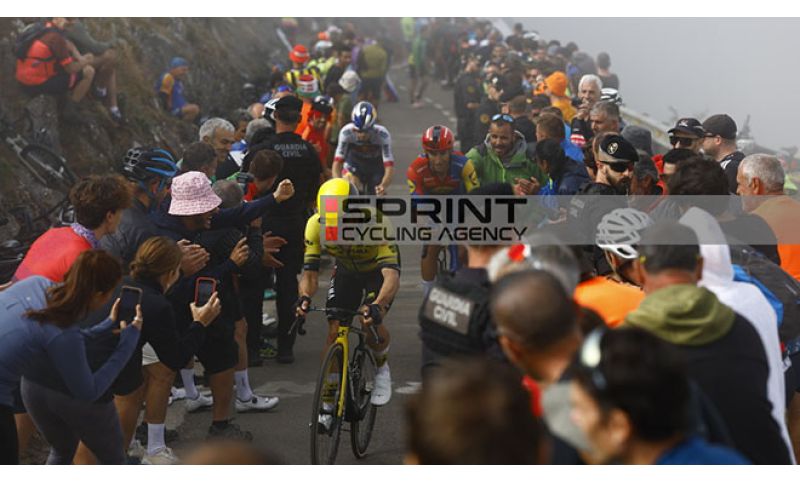
Gravel sections in a grand tour have always sparked debate - some are in favor, others consider them unnecessary and dangerous - but they have undoubtedly always delivered spectacle. This year's Vuelta also made this choice, featuring a gravel section in the sixth stage, Alcossebre - Castelló, won by Tadej Pogacar following a thrilling battle with Enric Mas.
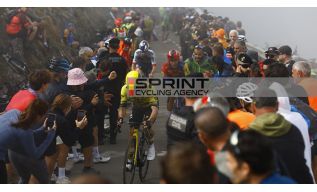
Well, now gravel could make its appearance even to reach the legendary Angliru summit, making the ascent even harder if possible. The proposal was put forward by the mayor of Riosa, José Antonio Muñiz, who presented two possible solutions to Vuelta director Javier Guillén. The latter assured that he and his team are considering the idea, albeit with great caution, given the extreme difficulty of the climb.
«We are open to evaluating its feasibility, provided it increases the interest and spectacle of the stage without overloading the riders or compromising safety. We listen to all proposals, even if only some can be implemented» Guillén commented during the presentation of the Gold Medal from the "Friends of Angliru" association.
The Asturian newspaper La Nueva España explains that one of the options would be to pass through the town of Muriellos on a route of approximately 4 kilometers, a mix of concrete and gravel, until it joins, at the Lagos curve, the traditional climb.
The other option involves taking the road from Ablaneo to El Cabornín and then taking a path that would rejoin, again at the Lagos curve, with the traditional Viapaná climb. In this case too, the road surface would be gravel and concrete on the steepest sections. The only advantage for the riders? In both cases the climb would be slightly shorter than the one that traditionally starts from the village of Vega.



 1
 1
8
8



 |
 |
||
 |
 |
|
|
 |
|
||




 Ritratti
 Oscar
 Albi d'Oro


Se sei giá nostro utente esegui il login altrimenti registrati.