
















Visit Emilia - Emilia Tourism Destination becomes the certified destination with the largest territorial extension in the Western world and the most extensive area in terms of population complexity, history, morphology and services.
It is tourism that respects rivers and forests, that listens to those who inhabit these places, that preserves traditions instead of consuming them. As of today, this way of traveling has a new home: Visit Emilia - Emilia Tourism Destination has obtained certification from the GSTC - Global Sustainable Tourism Council, the international body that defines worldwide standards for sustainable tourism.
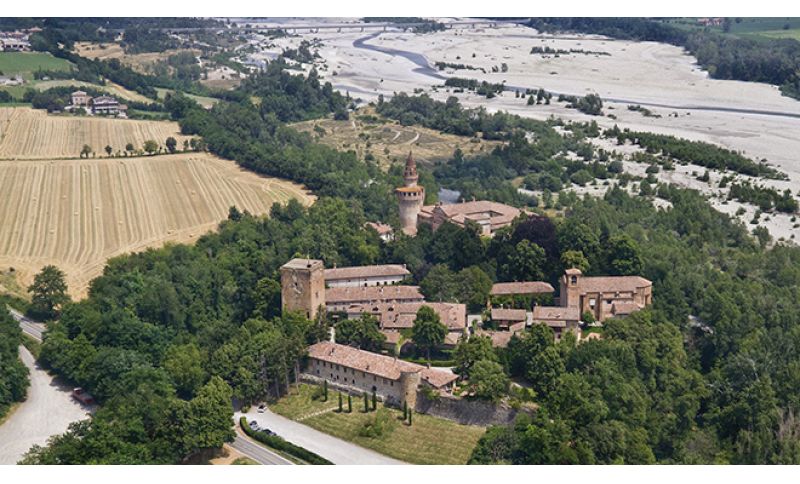
A large home, it must be said: 8,324 km² and approximately 1.28 million inhabitants. Visit Emilia tells and promotes the three provinces of Parma, Piacenza and Reggio Emilia, in Emilia-Romagna, in Northern Italy: three art cities and, all around, four very different landscapes. There is the Po, the Great River, with its floodplains and its silences; there is the Padana Plain, generous and industrious; there are the hills, dotted with ancient castles and villages; and there is the Apennines, the green lung of the entire destination. And it is precisely this variety that makes the achievement even more special.
To put it in perspective: outside the West, only The Red Sea surpasses it in extension, the destination certified as sustainable that develops along the western coast of Saudi Arabia, between Umluj and Al Wajh, with approximately 28,000 km² and over 90 islands. But there the resident population is still very small and largely linked to project personnel: approximately 6,000 people in the main settlement, with a forecast of approximately 14,000 resident-workers at full capacity. The inhabitants of the three Emilian provinces are over 90 times more than even that forecast: Visit Emilia is a lived, inhabited territory, crossed every day by those who work and grow there.
The recognition was issued by Vireo, a certification body recognized by the GSTC, at the end of a year of work by a dedicated team, accompanied by Virtou, a company specialized in GSTC consulting. The process was born within the broader "Sustainable Emilia" project.
«The recognition from the Global Sustainable Tourism Council to Visit Emilia is wonderful news for all of Emilia-Romagna - emphasizes Roberta Frisoni, Tourism Assessor of the Emilia-Romagna Region - It demonstrates that such a vast and diverse territory, from the Po to the Apennines, can speak with one voice when it chooses the path of sustainability. It is the direction on which the Region is investing: quality tourism, capable of generating economic and social value and protecting the natural and cultural heritage that makes it possible».
«It is an achievement that belongs to all of Emilia - comments Simone Fornasari, president of Visit Emilia - In this year we have knocked on many doors, we have listened to municipalities, businesses, universities, associations and citizens, and we have discovered that here sustainability was not a new word: it was already a way of living, made of concrete projects and passionate people. The GSTC certification gives us a method and a responsibility: to continue growing together, measuring every step, so that those who come to visit us can experience the territory without consuming it».
«The GSTC certification of Visit Emilia as a sustainable tourism destination is a result of extraordinary value, which makes the entire Italian tourism system proud. - states Stefano Ravelli - With its 1.2 million inhabitants, it is the largest certified destination in the world, testifying to a path capable of involving communities, businesses and stakeholders in a shared vision of sustainability. As Board Member of the GSTC and President of the GSTC Italy Working Group, I especially want to emphasize the value of the work carried out by a small public organization that, with vision, competence and tenacity, has been able to coordinate a project of international scope».
To get here, the destination had to meet the GSTC criteria for destinations, collected in four major areas. Governance, that is, the way relationships are built with institutions, businesses and residents. Cultural sustainability, which concerns the care of heritage and events. Economic and social sustainability, which measures the impact of tourism from employment to the third sector, to sustainable mobility. And environmental sustainability: from the park system to the management of water, waste and energy, with practices already in place and projects underway.
It was a collaborative effort, made above all of listening. Visit Emilia met many subjects dealing with these issues, from municipalities to transport companies to universities, and promoted 24 participatory meetings in the territory: 9 with stakeholders and tourism businesses, 15 with operators and associations. Along the way, dozens of projects already underway emerged, from university laboratories like the RESHub in Piacenza to sustainability reports from realities like Barilla, from KilometroVerdeParma to Reggio 2030.
And then there is nature, which here is a true and lived heritage. The park system, with the Tosco-Emilian Apennine National Park and regional parks, and two UNESCO MaB Biosphere Reserves, the Tosco-Emilian Apennine and the Po Grande, tell of a territory where forests, ridges and waters are carefully preserved by generations.
To all this is added a collection of economic, cultural and environmental data, which takes a first snapshot of the territory and will serve to follow its evolution over time; a strategy shared by the entire territory, under the direction of the Destination and the significant financial contribution of the Chamber of Commerce of Emilia; the "Emilia Like You" communication campaign, designed to tell of a welcoming Emilia for those who care about sustainability; and European projects like D3HUB, in partnership with other destinations, alongside a platform that evaluates tourist sentiment and the quality of their spending.
But certification, like any journey worth taking, is not an arrival: it is a starting point. To maintain it, we will need to continue coordinating all those involved, monitoring projects and events by verifying their results and, above all, growing the culture of sustainability, which also means more quality in hospitality.
So, those who paddle up the Po by bicycle, those who get lost among the castles of the hills or those who walk on the ridges of the Apennines know they are crossing a land that has chosen to take care of itself. And of those who arrive.
For info: www.visitemilia.com
The four areas of criteria
· Governance: relations with institutions, businesses and residents
· Cultural sustainability: management of heritage and events
· Economic and social sustainability: employment, third sector, sustainable mobility
· Environmental sustainability: parks, water, waste and energy
Next objectives
· Coordination of those involved
· Monitoring of projects and events and verification of expected results
· Growth of sustainability culture and quality of tourism hospitality


 1
 1
3
3
3
3

 Ritratti
 Oscar
 Albi d'Oro


Se sei giá nostro utente esegui il login altrimenti registrati.