

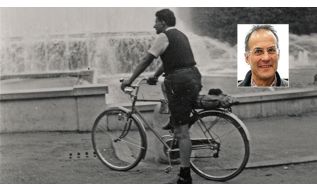
















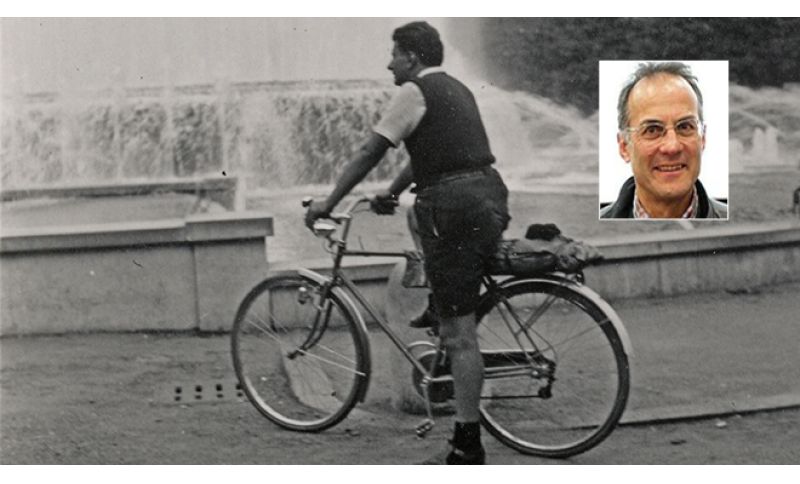

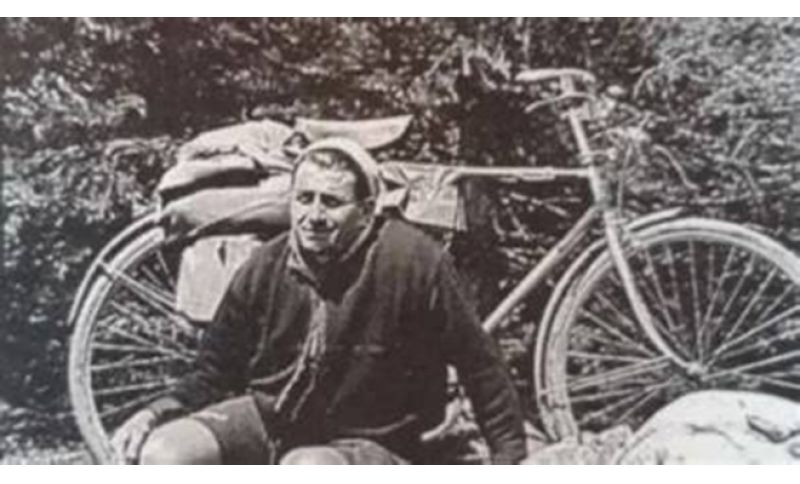

He rode an Umberto Dei. In the countryside, in the city. Around, on trips. Often out and about. Once even on a journey. The departure from Milan, Piazza Castello, then along the Via Emilia, Piacenza, Parma, Reggio, Modena, Bologna, Cesena, San Marino, Riccione, Ravenna, Comacchio, Ferrara, then Verona, the lakes Garda, Iseo, Como, Varese and Maggiore, the return to Milan, Piazza Castello. Twelve hundred kilometers. He was 33 years old. It was 1941. He approached Aldo Borelli, director of the "Corriere della Sera": "Republics, beaches, lakes, mountains, highways: what wonders!", "My intention would be to send you many articles: then you would choose the best ones", "Forgive me for taking the liberty of presenting my wishes to you", "A note in 'La Domenica del Corriere' to be able to publish, if needed, my photograph in the 'Who Has Seen Him?' section" and "A replacement saddle at the end of the tour".
Giovannino Guareschi was a man – a journalist, a writer, a humorist, a cartoonist – on a bicycle. Already in 1932, when he was 24 years old, he began writing articles for "La Fiamma," a periodical from Parma, with the column "Bowden, a Philosopher on a Bicycle": Frank Bowden was the founder of the English Raleigh bicycles. And on "an old contraption" that he had found "in the attic broken and rusty" and that helped him "to think", young Guareschi would pedal to seek inspiration, ideas and news, and finally "tell stories".
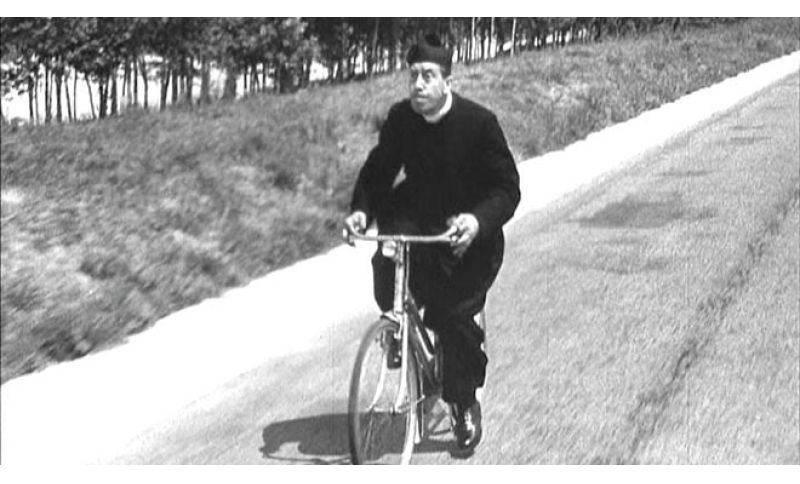
Guareschi also pedals in "I Don't Die Even If They Kill Me", the film by Andrea Porporati with Giuseppe Zeno in the lead role, from 2026, on Raiplay: here Guareschi's life resumes after World War II, that is, after being liberated from a concentration camp in Germany and before inventing the most famous characters of his novels, Don Camillo and Peppone, the priest and the mayor, the Christian Democrat and the Communist, who this time with a happy intuition are the two narrating voices.
The film, loosely based on the autobiography "Who Dreams of New Geraniums?" (Rizzoli, 1993) edited by Alberto and Carlotta Guareschi, Giovannino's children, seems to be more a missed opportunity than an opportunity seized. But the bicycle is there, especially when Guareschi guides the publisher (Angelo Rizzoli) and the director (instead the film producer, Giuseppe Amato, surrenders and follows them by car) to explore the Bassa Padana to know, discover, understand. Because only on a bike do you breathe, listen, observe, study, inhabit. A "Small World" (Rizzoli, 1948), but to be lived in every sense, but to be savored with all the senses.
Guareschi still pedals through books. "The Discovery of Milan" is Giovannino Guareschi's very first book (published in installments and collected in 1941, republished in 2014 by "Corriere della Sera," Rcs Libri): and it tells a love story, the one between Giovannino and Margherita. "The Ghost on a Bicycle" (Solferino, 2022) is the book in which Enrico Brizzi pursues the writer by retracing that journey along the Via Emilia and beyond, 80 years later, and it is a physical journey, a geographical one, on the same roads but often almost unrecognizable, and also a literary journey, a poetic one, through the history of Guareschi and Italy. And still "Italy by Bicycle" (Excelsior 1881, 2012), among drawings, cartoons and reportage by "a dreamer on two wheels", told by Marco Albino Ferrari. And Guareschi on a bicycle presides over the cover of "I Don't Die Even If They Kill Me", the human adventure of Giovannino (by various authors, catalog of an exhibition in Rimini in 2008).
Guareschi pedaled and wrote, dreamed and joked: "It's sad but it must be just like this – he maintains in "Who Dreams of New Geraniums?" - if my young brother puts on short pants, people say: Look, a young man in sports attire. If, instead, I put them on, people shout: Look, a man in underwear!".




 Ritratti
 Oscar
Oscar Albi d'Oro


Se sei giá nostro utente esegui il login altrimenti registrati.