
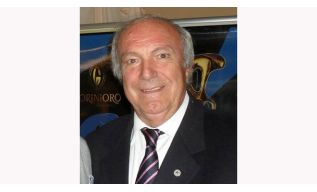














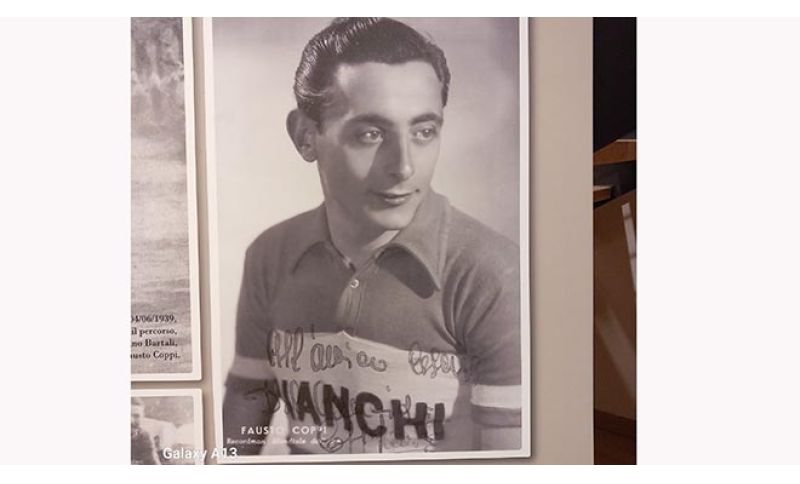
Buti, the Palio of Sant'Antonio, the most important palio – according to the people of Buti – excluding the one in Siena, the first Sunday after the feast of Sant'Antonio Abate on January 17th. A week, at least, of celebrations and festivities, from the neighborhood dinners to the flag-wavers' parades up to the race in this town in the Pisan foothills at the foot of Monte Serra. An event that attracts thousands of people. Guest of honor, in 2010, invited by the San Michele neighborhood, Cesare Del Cancia. By car, with a driver at his side and his granddaughter Fernanda behind him. The photographs portray him as serious, attentive, aware. He is 94 years old. Around him, the crowd recognizes him, invokes him, celebrates him. The impression is that behind the tough face and the stern gaze of the champion lies the sensitive heart and the moved soul of a man who didn't expect it. Not so. Then Del Cancia would have surrendered to memories. Above all, that of his victory at the Milan-Sanremo in 1937.
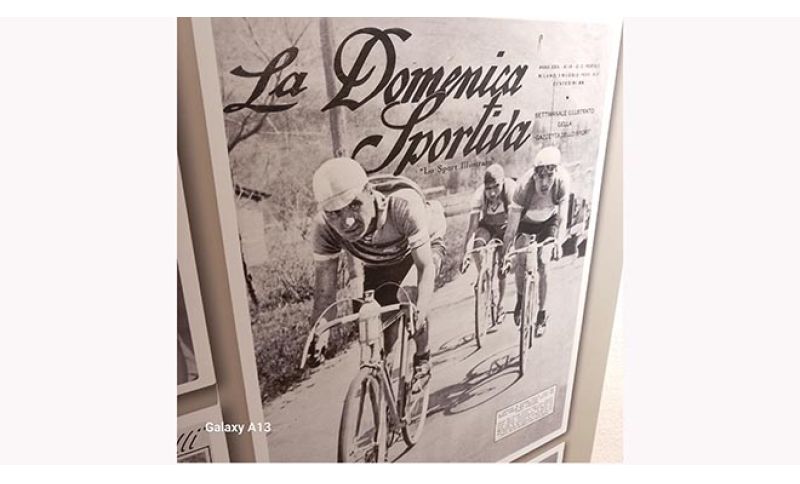
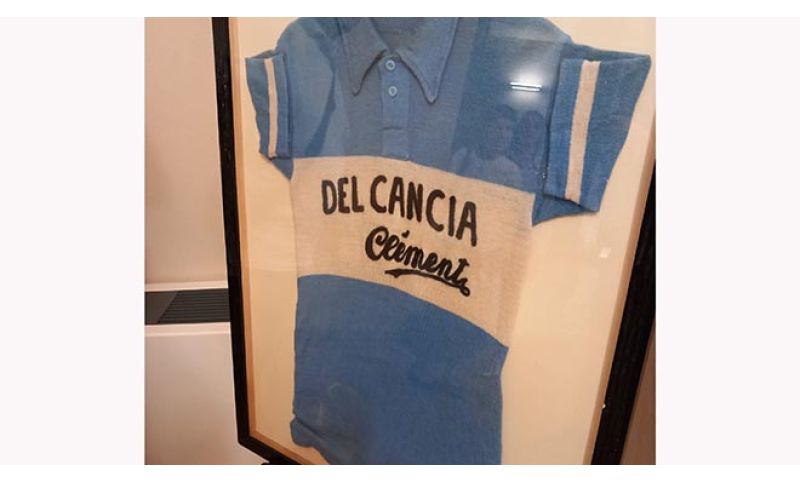
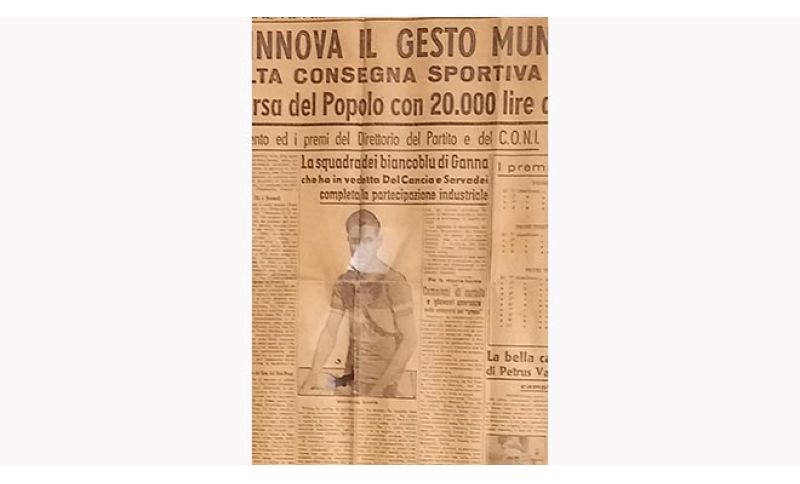
“It was March 19, 1937. I still remember with what emotion I was preparing to return to Buti after my triumph at the Milan-San Remo. ‘La Gazzetta dello Sport’ dedicated the front page to me and for my fellow townspeople, proud of my surprising success, it was like welcoming a brave hero. Sports journalism included me among the ‘cursed Tuscans’, that is, among those champions who, like Bartali, Bini, Bizzi, brought a new breeze to Italian cycling before the Second World War. I cannot forget the warmth of the people of Buti when they welcomed me that day. I presented myself accompanied by my team, the Ganna, and by sports officials. With the help of the guards, I entered Piazza Garibaldi on my bicycle. I was just over twenty years old and had a fine athlete's physique: I presented myself in my knickerbockers, the tight-fitting team jersey and, as was customary then, with my hair slicked back and shiny with brilliantine. I still have in my eyes the proud gaze of my father Luigi and my mother Maria, she who never missed an opportunity to say that it was also thanks to her zabagliones if I had succeeded in that daring 70-kilometer breakaway! The crowd of fans surrounded me. Journalists and photographers could barely approach, hindered as they were by so many beautiful girls who were trying to get forward in search of my autograph. Those were the days! With such emotion today, at the age of 94, I am back in Buti reliving those unforgettable moments, the pinnacle of a career that war could not erase. I greet you, then, dear people of Buti, you who have not forgotten me, a tenacious man from Buti in love with cycling”.
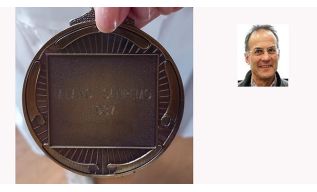
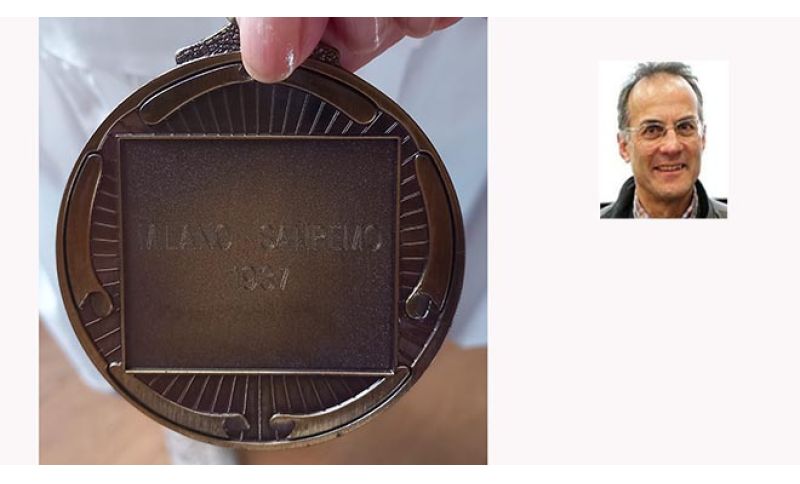
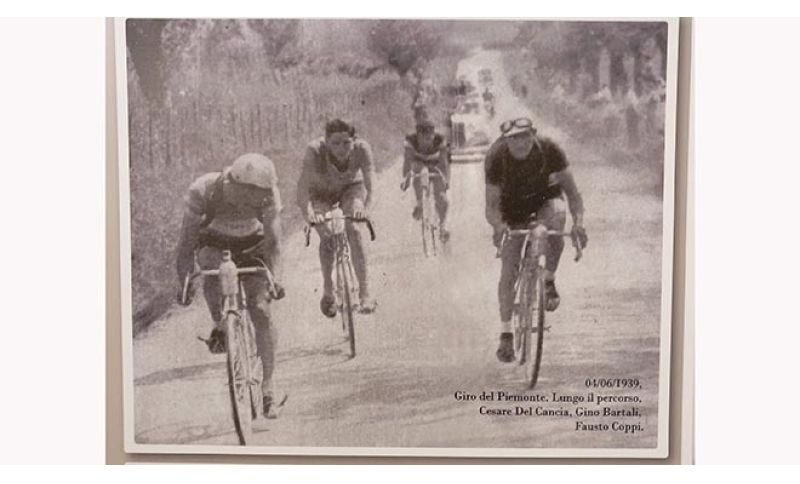
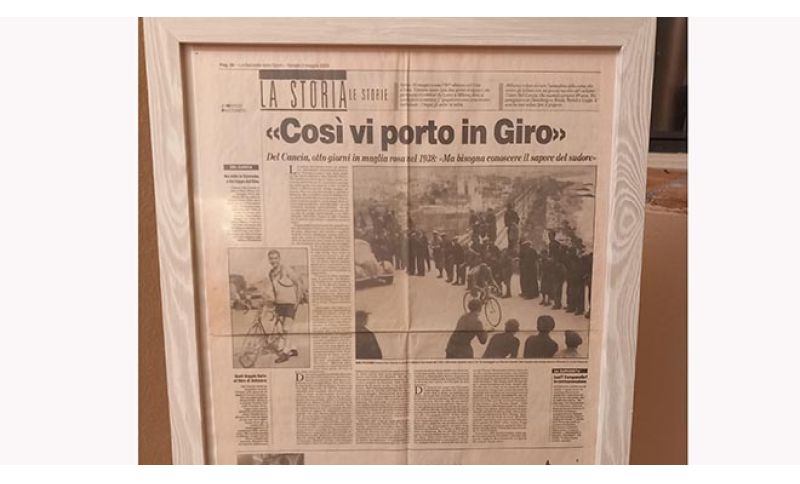
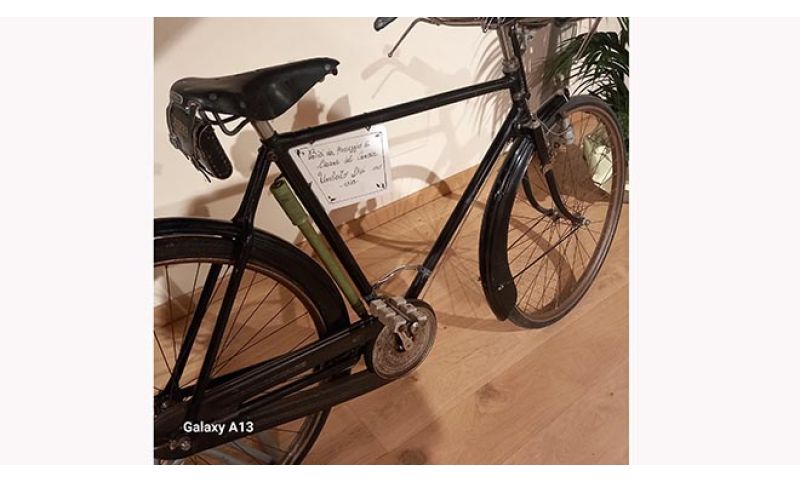
This text also reappeared the other evening in the Castel Tonini in Buti (the exhibition remains open until September 30, Saturday and Sunday from 4 to 7 p.m., for information tel. 349/5662007), among bicycles and jerseys, water bottles and tubulars, among photographs and caricatures, magazine covers and newspaper clippings, among testimonies and confidences, among the biography “Cesare Del Cancia - The Terror of the Aces” by Massimo Pratali and precisely the medal from the 1937 Milan-Sanremo, which Fernanda Del Cancia, Cesare's granddaughter, wore around her neck, moved and proud. There was no sport – at least in the twentieth century – like cycling, capable of entering the hearts of people, into the land of a place, into the air of a street. There was no sport – and perhaps there still isn't – like cycling, in which one feels so represented, interpreted, inhabited. There was no sport like cycling, in which memory is cultivated, resurrected, trained. Del Cancia – hail, Cesare – would be proud of this renewed attention and this rediscovered affection.



 3
3
 3
5
5
3
5
5

 Ritratti
 Oscar
Oscar Albi d'Oro


Se sei giá nostro utente esegui il login altrimenti registrati.