
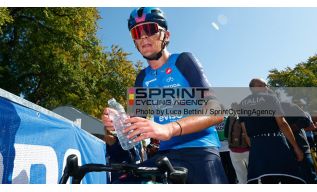
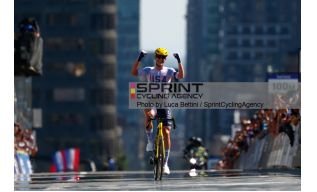

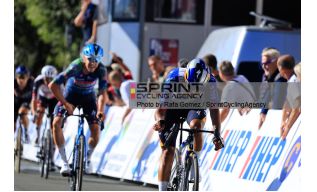



















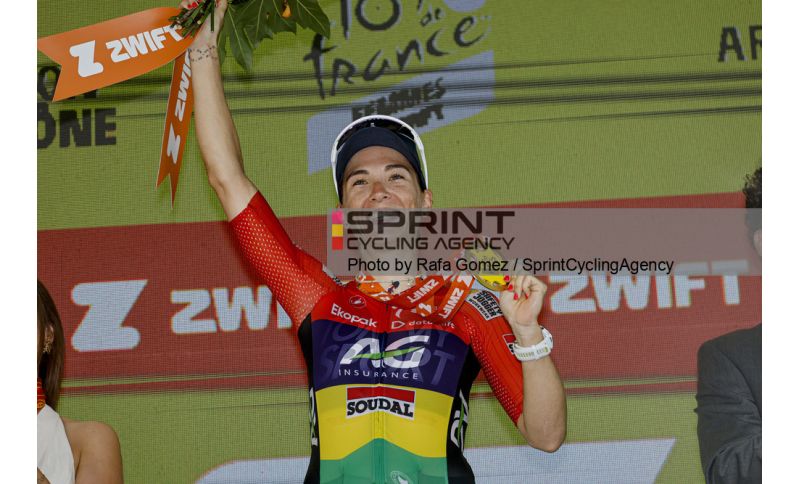
Yesterday Kim Le Court Pienaar delivered a truly spectacular performance in the sixth stage of the Tour de France. The athlete from Mauritius racing for the Ag Insurance team first chased down and then won at the finish line in Tournon Sur Rhone, securing her second victory at the Grand Boucle. After stepping onto the podium, Kim shared her impressions about the success, but when discussing her performances, she decided to shed light on a subject that unfortunately is still considered taboo today: the menstrual cycle.
Speaking to numerous media outlets and in particular to Sporza, Le Court Pienaar explained that she is currently racing with her menstrual cycle; while it had limited her in previous stages, in the sixth stage it had the complete opposite effect. "I had some really terrible days, during the time trial and the day after, every change of pace was truly exhausting and the heat made it even worse. The cycle really limited me, I thought that eating better would help but I was wrong, after the fifth stage I was really very frustrated. Then yesterday something happened, what had limited me in the days before pushed me to give something extra. It was a really beautiful day."
While for some athletes it is still taboo to talk about it, Kim wanted to do so directly, indeed emphasizing how the menstrual cycle is a blessing to be proud of and certainly not ashamed of. "Unfortunately, many people both inside and outside the team still see the cycle as something negative that causes embarrassment, but it's a part of us and we should talk about it more freely - Le Court continued - Personally, I have no problem discussing this topic, indeed I believe it's the right thing to do, we shouldn't be ashamed of it. It's what allows us to be women, we need to learn how to manage it"
The menstrual cycle in the world of sport has created major debates and in recent years athletes themselves have finally started talking about it openly. According to scientific studies, the cycle can influence athletic performance in a positive way by improving it and allowing athletes to reach higher energy peaks, but it's not always easy to control. Depending on the individual, however, the effects can vary and even be negative, especially in the first few days. An example of this is the 2025 Liège-Bastogne-Liège edition: Demi Vollering after finishing in third place had declared that she was severely limited by pain and hormonal changes related to her cycle. The words of Le Court Pienaar, especially from a platform like the Tour de France Femmes, shine a spotlight once again on a subject that must no longer be a taboo.



 4
4
 4
1
1
10
10
4
1
1
10
10

 Ritratti
 Oscar
Oscar Albi d'Oro


Se sei giá nostro utente esegui il login altrimenti registrati.