

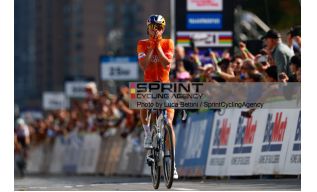
















At the Tour de France Femmes, there were checks on aerodynamic sports bras: no cases were reported, but controversy erupted over inspections carried out by a male judge.
The time trial at the Tour de France Femmes 2026 did not spark discussion solely for the times and the battle for the yellow jersey. Before the start, in fact, attention focused on a series of technical checks implemented by the UCI to verify compliance with regulations on clothing, with particular attention to padded sports bras or other elements that could offer an aerodynamic advantage.
A procedure that immediately ignited debate, especially regarding the manner in which the checks were conducted.
Articles 1.3.032 and 1.3.033 of the UCI regulations are very clear: clothing must serve exclusively to dress the athlete and cannot artificially modify the body's shape to obtain aerodynamic benefits.
For this reason, it is forbidden to use foams, padding, adhesive tape, plastic inserts, or any other element applied to the chest or beneath it with the aim of creating a silhouette more favorable to air resistance during time trials.
However, differences in fabric texture designed to improve aerodynamics are permitted, provided they are integrated directly into the garment's construction and respect the maximum limit of one millimeter of surface roughness.
In the days preceding the time trial, there was talk of a female judge being assigned to conduct the verifications. Reality proved to be different.
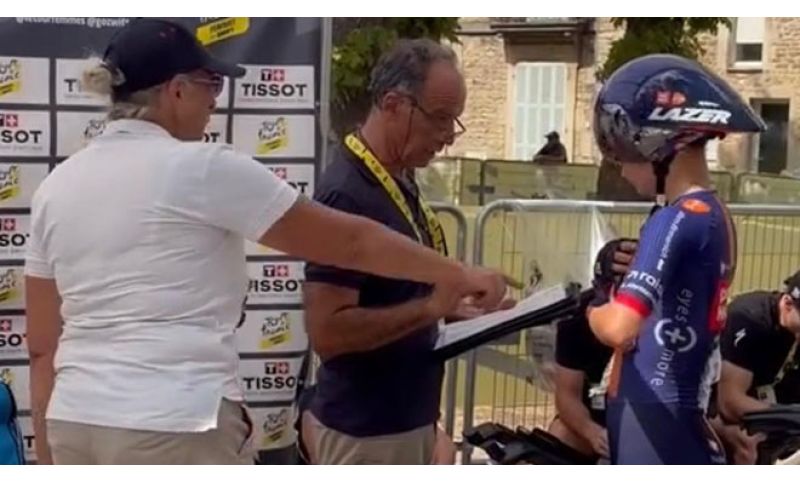
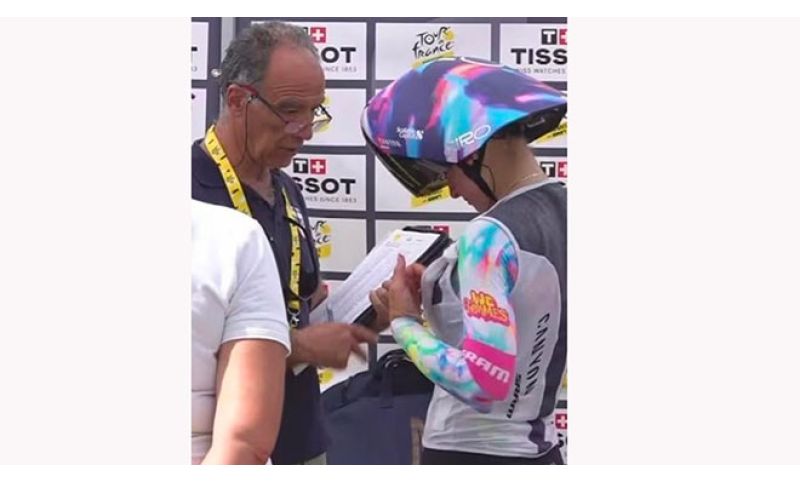
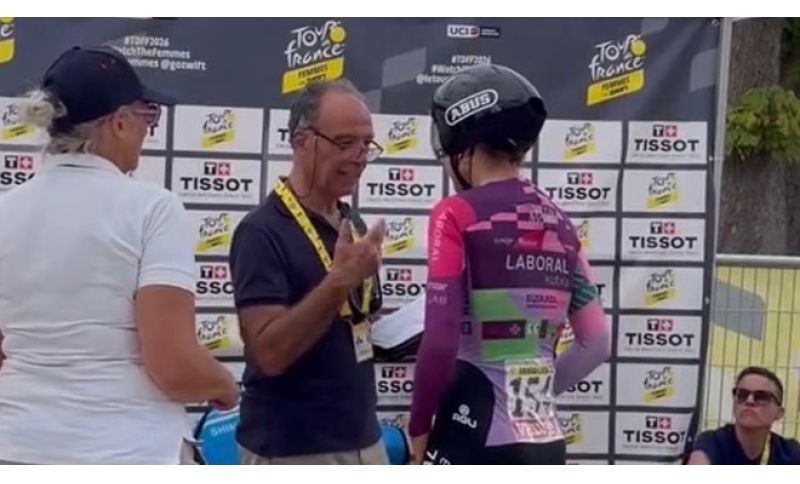
In the starting area, two tents had been set up. The first, completely open and visible, was staffed by a male judge, who conducted a preliminary check by asking some athletes to open their jerseys to verify the possible presence of padding in the sports bra or other elements not permitted by the regulations.
Only if doubts had emerged would the cyclists have been taken to a second closed tent, where a female judge would have conducted a more thorough inspection of the undergarment.
Fortunately, no athlete was subjected to this second verification, a sign that the preliminary checks did not reveal any irregularities. Despite no cyclist being sanctioned, the fact that the first check was entrusted to a man sparked numerous controversies.
During the live broadcast on Sporza, former professional and commentator Ine Beyen clearly expressed her discomfort. "As a woman, I would find it rather intimidating. Especially because the surrounding environment is not protected".
Critical messages against the UCI also multiplied on social networks. Many users contested the organizational choice, questioning why the preliminary check had not been directly assigned to a female judge, thus avoiding a situation deemed by some inappropriate and disrespectful of the athletes' privacy.
Among the race's protagonists, skepticism about the usefulness of these verifications is not lacking. World champion Lotte Kopecky downplayed the issue after completing her time trial. "I believe it's mostly a lot of fuss. The matter has been blown out of proportion. It's a topic that has been discussed for a long time, even among men. If a woman prefers to wear a push-up bra during a time trial, I think it should be allowed. I don't have the impression that it's abused so much".
Even more clear is the position of Belgian Shari Bossuyt, who defined the inspections as "absurd", questioning where the suspicions came from that led the UCI to introduce this type of check. The incident reopens the debate on a topic that is becoming increasingly central in modern cycling: how far is it right to go in the search for possible aerodynamic advantages?
The UCI, long committed to combating any artificial modification of body position or shape that could alter performance, believes that these checks are part of normal technical verification activities.
On the other hand, however, the question of the procedures by which such inspections are carried out remains open. If the objective of ensuring compliance with regulations is understandable, many observers believe that such delicate procedures should be organized with particular attention to the privacy and sensitivity of the athletes, avoiding situations that could generate embarrassment or fuel unnecessary controversy.
At the end of the day, no irregularities were found and no cyclist had to proceed to the second phase of checks. But the debate on the procedures of the inspections will, in all likelihood, continue to accompany the Tour de France Femmes.

 4
4


 4
4


 3
3
1
1
5
5
1
1
3
3
1
1
5
5
1
1

 Ritratti
 Oscar
Oscar Albi d'Oro

