

















"Awake at dawn. The streets still deserted. The sun, master of the sky, begins to cast its insolent caresses. We head off roaring towards Rakosfalva, a small village six or seven kilometers from Budapest, where the start and finish line of the world championship for cyclists who love the delights of the road should be located. But the finish line isn't there".
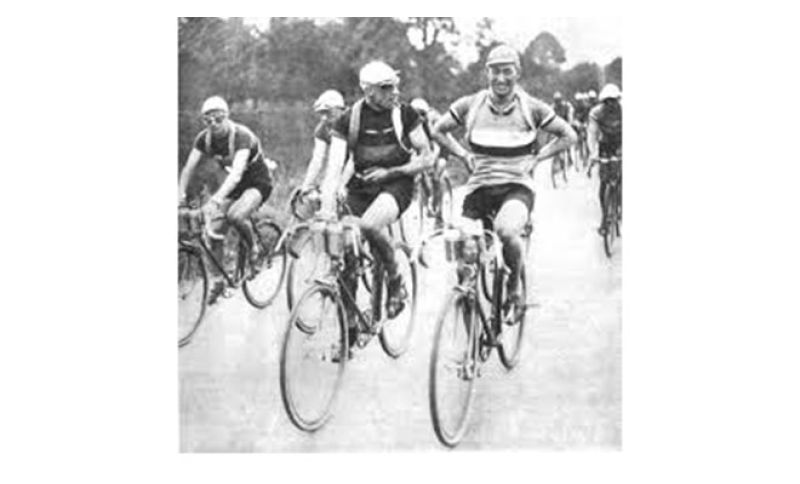
Hungary, August 16, 1928, 6:15 AM, eighth edition of the World Championship. First the professionals, 191.7 km, shortly after the amateurs, 192 km. Italy as defending champions, those from the Nurburgring 1927: among the professionals, a clean sweep with Binda ahead of Girardengo, Piemontesi and Belloni; among the amateurs, Orecchia in third.
"Only outside the village, on the white road, a modest group of people and a few large cars waiting. This is it. The world championship doesn't have much pomp. What does it matter? Everyone is here in a relaxed manner, without pretense, with a jovial smile, with a vigorous handshake of American style. And there are also the riders, of course".
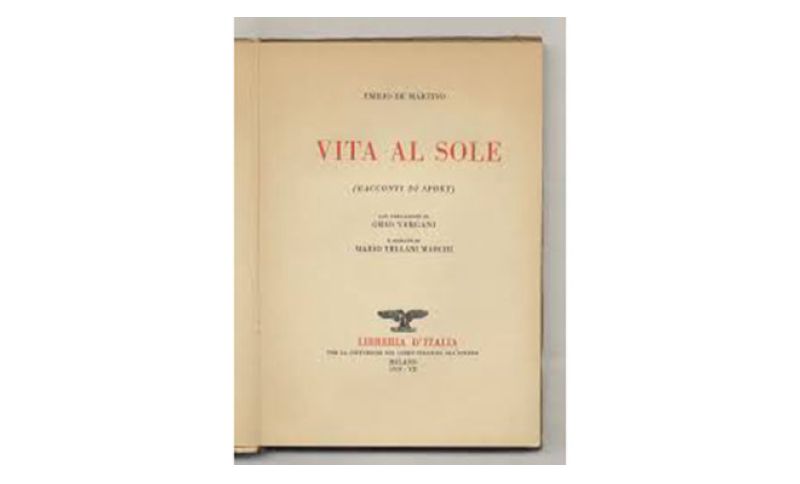
Emilio De Martino, correspondent for the "Corriere della sera", revisits that memorable day in "Vita al sole" (Libreria d'Italia, 1929), a collection of sports stories, fortunately inherited by the Lucos Cozza Bicycle Library.
"But the so-called 'aces' of the road lack that usual crowd of super-passionate fans who beg for a smile, a glance or a gesture from their champion. The 'you know, he greeted me' is not fashionable in this hospitable Hungary, where cycling is taking its very first steps. The passion will come here too".
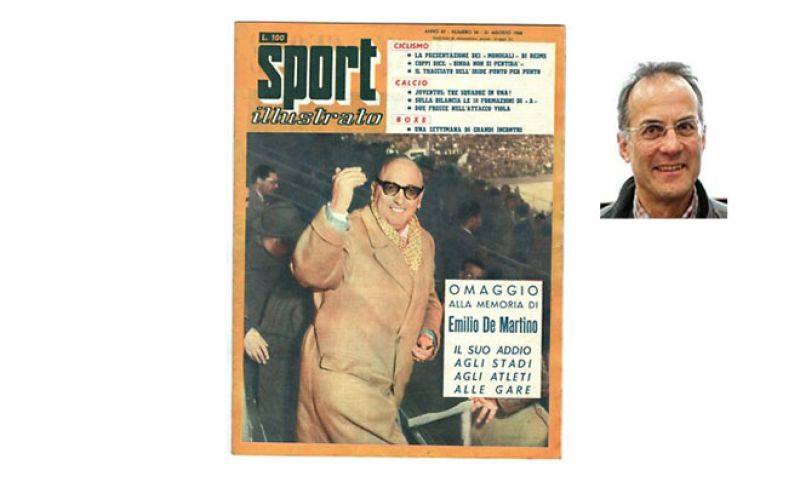
De Martino, who had played football (Juventus, Novara, Lazio...), as head of the sports section of the "Corsera" would later become director of the "Gazzetta dello Sport" from 1947 to 1949, and later at "Lo Sport" and "Lo Sport Illustrato". A novelist, "La squadra di stoppa" was a success. Yesterday, he would have turned 131 years old.
"This gathering on the semi-solitary road, in the very early cool morning, without the staging of the great races, reminds us of the youthful escapes from home when, armed only with enthusiasm, we would sneak away to run to our beloved two-wheeled companion, perhaps a Milan-Magenta round trip".
Sports journalism was a cosmic space. Little radio, no television, not even imaginable internet and phones, De Martino and his colleagues had the power, if not the duty, to portray and describe, remember and recount, convey flavors and smells. Those who read were transported elsewhere. More than a typewriter, that machine served to show, imagine and also dream.
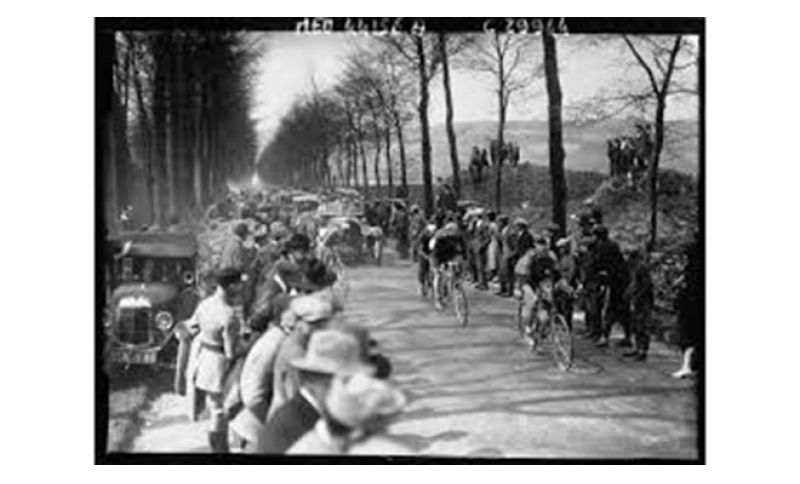
"The professionals depart and we throw ourselves in their tracks across a patriarchal landscape lush with meadows and slopes. Every now and then we encounter curious gendarmes with enormous plumed hats, who salute militarily. The sandy roads and roller-coaster mountains begin and so does the torment of dust. The inhabitants of the small villages we pass through are all outside their homes, curious and amazed, watching the unusual passage of so many multicolored jerseys, so many cars and so many men masked with dust".
The journalists followed, accompanied, explored, transmitted, inhabited, lived the race. The world championship will be bitter for the Italians. Binda and Girardengo study each other, mark each other, neutralize each other.
"Belloni, worn out by punctures, retires; and the group proceeds at a tourist pace. An inexperienced young boy riding a prehistoric bicycle manages to easily follow the so-called riders. But the race is over now. Binda and Girardengo now understand their initial error and cannot react to their discouragement. For them it is finished. They both stop on the deserted road scorched by the sun and ask for hospitality in our automobile; their gaze is pleading and full of sadness".
Neutralized against each other, Girardengo and Binda (later disqualified by the Uvi, the same would happen 20 years later to Bartali and Coppi), Belloni retired, eight finishers out of 16 starters, the Belgian Georges Ronsse won. It would be the amateurs who would bring us happiness.
"Suddenly two furies arrive behind us: we turn around. Our hearts skip a beat. They are two blue jerseys: Grandi and Mara marching at full speed bent over their dusty bikes, their faces smiling with pride".
It was simpler journalism, more honest, more literary. More true. More direct. And less partisan, less biased, less shouted. Binda and Girardengo asking for a ride in the journalists' car, standing up on the vehicle, cheering, shouting, suffering. And Binda saying: "I'll give you all the world champion jerseys I have at home". Wonderful.
(end of the second installment – end)



 1
1
 1
1

 Ritratti
 Oscar
Oscar Albi d'Oro


Se sei giá nostro utente esegui il login altrimenti registrati.