
















He was twenty-one years old, but looked ten years older, the thirty-year-olds of today seem younger than he was at that time. He already had a boxer's nose, a wide smile, rebellious hair. He was a rider, and what a rider, a climber, courageous, swift, resilient. If in 1935 he had won fourteen races, a star had been born, elbowing his way past Binda and Guerra, and in that 1936 he became, for everyone, Gino Bartali, and he had become a comet.
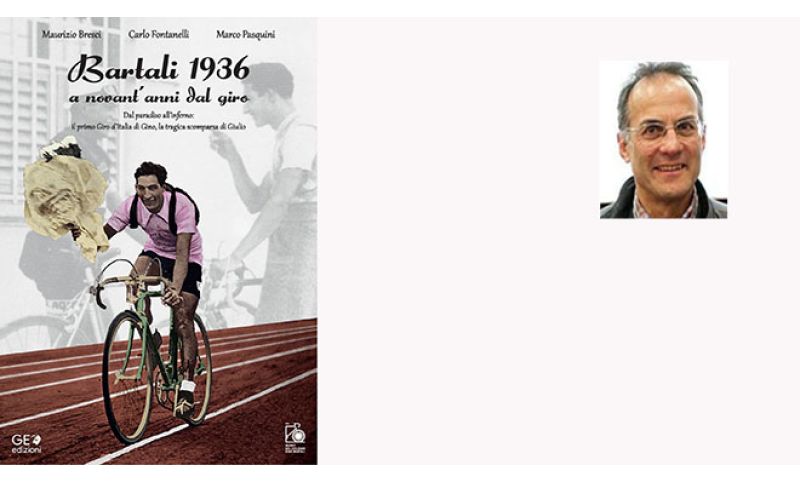
Maurizio Bresci, Carlo Fontanelli and Marco Pasquini are the authors of "Bartali 1936 - ninety years from the Giro" (Geo editions, 128 pages, 15 euros, with the support of the Gino Bartali Cycling Museum): a year lived victoriously, dangerously, tragically, a year between a birth (that of Gino, champion) and a death (that of Giulio, Gino's younger brother). Texts (also by Giancarlo Brocci and Carlo Delfino), collaborations (also by Learco Guerra junior, Giuliano Passignani, Luca Carraro and Franco Rovati), front pages of "Gazzetta dello Sport" (one for each stage of the Giro d'Italia), photographs, covers, brief articles, statistics, documents, diary pages, portraits of other Tuscan protagonists. A careful and affectionate research.
Why precisely 1936? Because Bartali shone as a rider and risked fading as a man; because it happened ninety years ago, and anniversaries help us remember and rediscover; because Bartali cannot be dispensed with, especially when cycling becomes a sport of mere rankings and classifications, performances and results; because he is a founding father of the bicycle republic, as a boy who dreamed, as a rider who took off, as a sports director who recruited and taught, as a journalist who explained, as a witness who told stories, and – it would only be known after his death – as a messenger of peace. And because, now narrated and interpreted, it must now be analyzed, scanned, radiographed in installments. Bartali is a series of infinite seasons and episodes.
Bartali becomes larger than life on May 27, 1936, in the ninth stage of the Giro d'Italia, the Campobasso-L'Aquila stage of 204.5 km, and the Apennines have often revealed and upset more than the Alps. "The Italian champion – wrote Emilio Colombo, director of "Gazzetta dello Sport" on a front page of May 28 entirely dedicated to the pink race – won by routing the opposition". The rhetoric belongs to those years, those times: "Let us raise a hymn to the champion of champions". Colombo writes Bàrtali, with the accent on the first 'a', for those who had never known him, for those who had never read about him: "Gino Bàrtali tormented the experts. Italian cycling has been so rich in class athletes, allow me to say: immense, that for the new ace it becomes terribly difficult to establish himself definitively". And further on: "To me Bàrtali, who is less stylish than Binda and less plastic than poor Bottecchia, but is an impressive climber, had made an enormous impression along the impossible slopes of Macerone". And this is, as the authors emphasize, paradise.
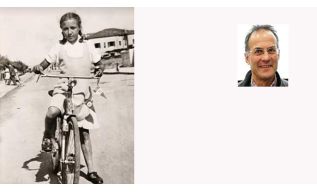
Instead he plunges into hell on June 14, a week after the conclusion of the first of Gino's three Giro victories. Tuscan championship for young fascists, from Pistoia to Florence, 120 km. "Near Bagni a Ripoli, almost at the end of the descent, a tragic accident occurred – writes "La Gazzetta dello Sport" -. A car coming from the opposite direction hit Bàrtali", Giulio, of course, "Bàrtali was immediately assisted by the support cars", "The unfortunate Giulio Bàrtali, transported to Santa Maria Nuova hospital, was immediately treated by the attending physician who issued the following report: 'Giulio Bàrtali, age 20, resident in Ponte Ema, suffered multiple wounds to the head, forehead, left deltoid region, fractures to the left clavicle, abrasions in various parts of the body, struck by traumatic shock. Prognosis reserved". A few hours later Gino is in the hospital. Giulio needs blood transfusions. Gino donates his. Giulio fights, thirty-six hours of agony. An internal hemorrhage during surgery proves fatal. It is Guerra who convinces Gino Bartali to get back in the saddle, after a month of discouragement and refusal. The very Guerra with whom Bartali returns to victory in the Giro della provincia di Milano, an ancestor of the Baracchi. And it will be paradise again with victory in the Giro di Lombardia.
So I take the liberty of clarifying the book's subtitle: not from paradise to hell, but from paradise to hell and back to paradise. Much more exhausting than Paris-Brest-Paris, much harder than Liège-Bastogne-Liège.
-
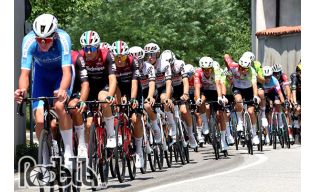
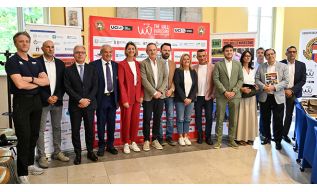
On the occasion of the 90th anniversary of the first of Gino Bartali's three Giro d'Italia victories, the Association of Friends of the Gino Bartali Cycling Museum, in collaboration with the Nova Unione Velocipedistica Italiana, organizes two days of events in Ponte a Ema (Florence). Giulio Bartali, Gino's brother, will also be remembered. Saturday 13 and Sunday 14 June feature processions and visits, lunches and dinners, activities for children, vintage rides, theatrical performances. In particular, Saturday 13 afternoon the conference "Bartali in 1936" with Carlo Delfino ("Bartali's early years"), Giancarlo del Balio ("Bartali between '35 and '36"), Marco Pasquini ("Giulio Bartali") and Giovanni Nencini ("The evolution of the bicycle from fixed gear to early derailleurs").



 5
5
 5
2
2
5
2
2

 Ritratti
 Oscar
Oscar Albi d'Oro


Se sei giá nostro utente esegui il login altrimenti registrati.