


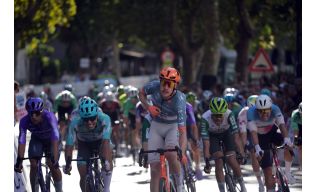
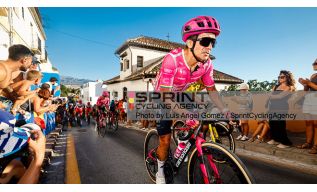
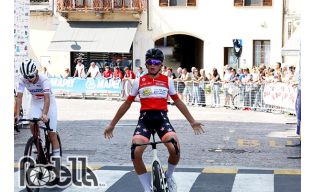












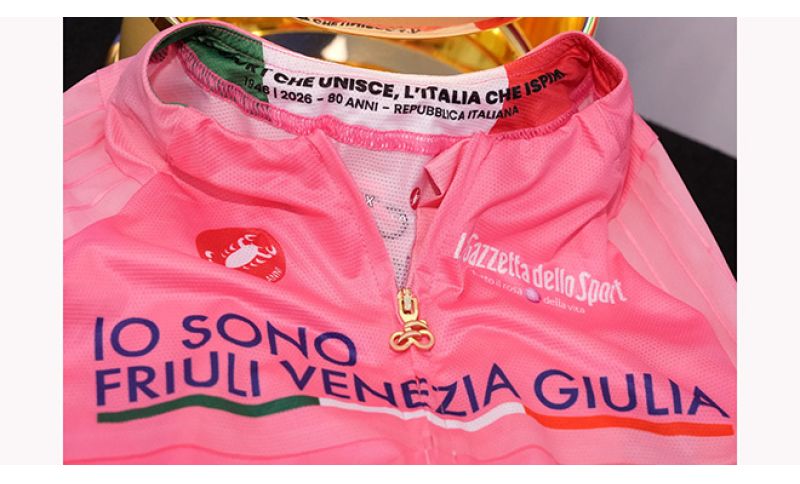
The pink jersey is the symbol par excellence of the Giro d'Italia, one of the three Grand Tours of professional cycling alongside the Tour de France and the Vuelta a España. Introduced in 1931, it owes its color to the sports newspaper La Gazzetta dello Sport, printed on pink paper.
The first rider to wear it was Learco Guerra, who wore the leader's jersey on May 10, 1931 after winning the first stage of that Giro, the Milan-Mantua. Since then, in 90 editions of the race, 268 riders from 30 nations have worn it: at the top is Merckx with 78 jerseys ahead of Moser with 57 and Bartali with 50. The Pink Jersey has become the main objective of every rider: wearing it even for just one day means entering history. The last winner of the Giro d'Italia is Simon Yates, protagonist of a memorable feat on the Colle delle Finestre stage, where he managed to overturn the race and claim the general classification. This year the pink jersey will celebrate the 80th anniversary of the Republic with text on the collar that reads: "The Sport that unites, the Italy that inspires. 1946 - 2026 - 80 years of the Italian Republic"
Throughout history, few champions have managed to dominate the pink jersey for multiple editions. The record of five victories belongs to three legends: Alfredo Binda, Fausto Coppi and Eddy Merckx. Close behind are other great names with three successes: Giovanni Brunero, Carlo Galetti, Gino Bartali, Fiorenzo Magni, Felice Gimondi and Bernard Hinault. Vincenzo Nibali is still the last Italian winner: 2016. Champions who have contributed to building the myth of the pink jersey, making it one of the most prestigious symbols in world sport.
The last edition was full of plot twists. From the start in Albania to the fairy tale of young Isaac Del Toro, to the Mexican's final collapse on the Piedmont mountains, the Giro confirmed its unpredictable nature. Among the protagonists was Mads Pedersen, who wore the first pink jersey. Primoz Roglic was the initial favorite for the final victory and Richard Carapaz was his rival. But it was Simon Yates, with the indispensable help of Wout Van Aert on the Colle delle Finestre stage, who wrote the decisive chapter: it's impossible not to remember his joy when he showed himself to the public in Rome with the pink symbol of victory.
What should we expect this year? Jonas Vingegaard is the man to beat. Winner of the Tour de France (2022, 2023) and the 2025 Vuelta, he aims to enter the Triple Crown club (an achievement his rival Pogacar has yet to accomplish) and arrives in extraordinary form after victories at Paris-Nice and the Tour of Catalonia. The absence of Pogacar makes him, on paper, even more dominant. However, the Dane doesn't have victory already in hand and will face opponents who will try to make his victory more complicated. Giulio Pellizzari is the young Italian, in strong growth (6th at the Giro and Vuelta in 2025, victory at Tour of the Alps) and can be the surprise to reignite our hopes. There's also Adam Yates, who will lead UAE in the absence of Almeida: the Briton represents experience and tactical freedom. Austrian Felix Gall is instead the pure climber, very dangerous on the big climbs of the third week. There's the return of the 2021 Giro winner, Egan Bernal. The Colombian is in great recovery after the accident that saw him risk his life in 2022 and now dreams of a return to the top.
Watch out for Dutchman Thymen Arensman, twice sixth in 2023 and 2024, who can insert himself into the podium fight, and Canadian Derek Gee, fourth in 2025, who needs to regain some form but has already shown he can surprise. Among the unknowns, finally, Spaniard Enric Mas, making his Giro debut. Undisputed talent, but physical condition still to be verified.
The pink jersey is not just a sporting symbol: it's an icon of Italian culture and cycling history. From the first leader Learco Guerra to the last winner Simon Yates, every edition of the Giro tells a unique story. This year there seems to be a script already written, one that announces Vingegaard's triumph. But the beauty of the Giro is precisely this: the pink jersey is not decided on paper but on the road, between fatigue, mountains and unpredictability.
HONOR ROLL
1909 - Luigi Ganna (Italy)
1910 - Carlo Galetti (Italy)
1911 - Carlo Galetti (Italy)
1912* - Atala (Italy) disputed with team classification
1913 - Carlo Oriani (Italy)
1914 - Alfonso Calzolari (Italy)
1919 - Costante Girardengo 1920-1929
1920 - Gaetano Belloni (Italy)
1921 - Giovanni Brunero (Italy)
1922 - Giovanni Brunero (Italy)
1923 - Costante Girardengo (Italy)
1924 - Giuseppe Enrici (Italy)
1925 - Alfredo Binda (Italy, in the photo)
1926 - Giovanni Brunero (Italy)
1927 - Alfredo Binda (Italy)
1928 - Alfredo Binda (Italy)
1929 - Alfredo Binda (Italy)
1930 - Luigi Marchisio (Italy)
1931 - Francesco Camusso (Italy) - birth of the pink jersey
1932 - Antonio Pesenti (Italy)
1933 - Alfredo Binda (Italy)
1934 - Learco Guerra (Italy)
1935 - Vasco Bergamaschi (Italy)
1936 - Gino Bartali (Italy)
1937 - Gino Bartali (Italy)
1938 - Giovanni Valetti (Italy)
1939 - Giovanni Valetti (Italy)
1940 - Fausto Coppi (Italy)
1946 - Gino Bartali (Italy)
1947 - Fausto Coppi (Italy)
1948 - Fiorenzo Magni (Italy)
1949 - Fausto Coppi (Italy)
1950 - Hugo Koblet (Switzerland)
1951 - Fiorenzo Magni (Italy)
1952 - Fausto Coppi (Italy)
1953 - Fausto Coppi (Italy)
1954 - Carlo Clerici (Switzerland)
1955 - Fiorenzo Magni (Italy)
1956 - Charly Gaul (Luxembourg)
1957 - Gastone Nencini (Italy)
1958 - Ercole Baldini (Italy)
1959 - Charly Gaul (Luxembourg)
1960 - Jacques Anquetil (France)
1961 - Arnaldo Pambianco (Italy)
1962 - Franco Balmamion (Italy)
1963 - Franco Balmamion (Italy)
1964 - Jacques Anquetil (France)
1965 - Vittorio Adorni (Italy)
1966 - Gianni Motta (Italy)
1967 - Felice Gimondi (Italy)
1968 - Eddy Merckx (Belgium)
1969 - Felice Gimondi (Italy)
1970 - Eddy Merckx (Belgium)
1971 - Gösta Pettersson (Sweden)
1972 - Eddy Merckx (Belgium)
1973 - Eddy Merckx (Belgium)
1974 - Eddy Merckx (Belgium)
1975 - Fausto Bertoglio (Italy)
1976 - Felice Gimondi (Italy)
1977 - Michel Pollentier (Belgium)
1978 - Johan De Muynck (Belgium)
1979 - Giuseppe Saronni (Italy)
1980 - Bernard Hinault (France)
1981 - Giovanni Battaglin (Italy)
1982 - Bernard Hinault (France)
1983 - Giuseppe Saronni (Italy)
1984 - Francesco Moser (Italy)
1985 - Bernard Hinault (France)
1986 - Roberto Visentini (Italy)
1987 - Stephen Roche (Ireland)
1988 - Andrew Hampsten (United States)
1989 - Laurent Fignon (France)
1990 - Gianni Bugno (Italy)
1991 - Franco Chioccioli (Italy)
1992 - Miguel Indurain (Spain)
1993 - Miguel Indurain (Spain)
1994 - Evgeni Berzin (Russia)
1995 - Tony Rominger (Switzerland)
1996 - Pavel Tonkov (Russia)
1997 - Ivan Gotti (Italy)
1998 - Marco Pantani (Italy)
1999 - Ivan Gotti (Italy)
2000 - Stefano Garzelli (Italy)
2001 - Gilberto Simoni (Italy)
2002 - Paolo Savoldelli (Italy)
2003 - Gilberto Simoni (Italy)
2004 - Damiano Cunego (Italy)
2005 - Paolo Savoldelli (Italy)
2006 - Ivan Basso (Italy)
2007 - Danilo Di Luca (Italy)
2008 - Alberto Contador (Spain)
2009 - Denis Menchov (Russia)
2010 - Ivan Basso (Italy)
2011 - Michele Scarponi (Italy)
2012 - Ryder Hesjedal (Canada)
2013 - Vincenzo Nibali (Italy)
2014 - Nairo Quintana (Colombia)
2015 - Alberto Contador (Spain)
2016 - Vincenzo Nibali (Italy)
2017 - Tom Dumoulin (Netherlands)
2018 - Chris Froome (Great Britain)
2019 - Richard Carapaz (Ecuador)
2020 - Tao Geoghegan Hart (Great Britain)
2021 - Egan Bernal (Colombia)
2022 - Jai Hindley (Australia)
2023 - Primoz Roglic (Slovenia)
2024 - Tadej Pogacar (Slovenia)
2025 - Simon Yates (Great Britain)

 2
2


 2
2


 5
5
1
1
3
3
5
5
1
1
3
3

 Ritratti
 Oscar
Oscar Albi d'Oro

