
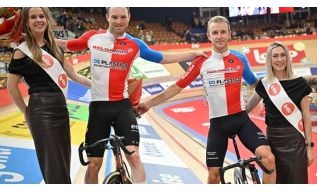















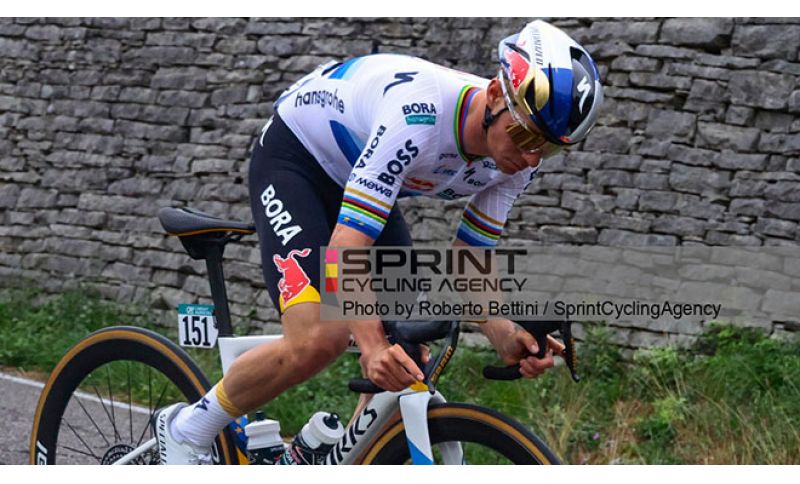
The Giro d'Italia is trying to seduce Remco Evenepoel with its best weapon: the time trial. Ahead of the route presentation, scheduled for Rome on Tuesday, November 3rd at noon, rumors are circulating about two individual time trials: one of 19 kilometers in the seventh stage, starting from Sulmona and finishing uphill at Campo di Giove, and a flat and lightning-fast 32-kilometer one at Monza and its surroundings, in the fifteenth stage: starting from the autodrome and finishing almost certainly in Milan, perhaps at the Duomo as happened with Dumoulin in pink in 2017 and Ganna as a superstar in 2020 and 2021. For Evenepoel, 26 years old, it would be a call difficult to ignore. The Belgian is the strongest time trial specialist in the world and in September he won his fourth consecutive world title in the discipline.
The Tour de France 2027, already presented, also offers an important opportunity: 71 kilometers overall against the clock, distributed across two stages. A route that showcases one of the most recognizable qualities of the Red Bull-BORA-hansgrohe Flemish rider. The Grande Boucle remains the most likely focal point of his season, but precisely the combination of time trials at the Giro and the Tour opens a question: focus on a single Grand Tour or attempt the double?
The hypothesis has appeal, but it comes at a price. Preparing for both the Giro and Tour together would require revising his calendar and could force Evenepoel to give up the spring classics, appointments to which he is particularly attached. For him and for Belgian cycling, it would not be merely a sporting choice: those races carry special weight in the country's market and tradition.
Then there is the overall design of the Giro. Among the rumors about mountain stages are the double climb of Mortirolo plus Passo Gavia in the Valtellina stage finishing at Aprica, and the iconic finish at Zoncolan in Friuli on the Saturday before the transfer to Rome for the grand finale.
These are climbs that could make the third week very severe and that would test even a rider who has improved considerably on the climbs. The time trial can attract Evenepoel; the mountains, however, could become the main obstacle to the double.
The choice will also depend on the risk of tackling two Grand Tours in a single season: an accident or a difficult day can change plans. For this reason, the Tour could remain the priority, especially after a year in which Evenepoel was able to concentrate on the French race after the classics. Winning the Giro and then standing on the Tour podium again (third in 2024 and second in 2026) would be an extraordinary result, but it is not certain that it would be enough to compensate for giving up the spring races. On Tuesday, when the route is unveiled, the Giro will be able to present its candidacy. Only then will Evenepoel and his team have all the elements to decide where to focus — and where to measure themselves — against the other great names in cycling.

 8


 8


 3
3
15
15
1
1

 Ritratti
 Oscar
 Albi d'Oro


