The one who, on the eve of the Tour de Mumbai, in India, a metropolis of almost twenty million inhabitants, went out on his bicycle convinced that he could take a ride around the neighborhood as if it were his Cotignola. The one who was convinced by his father's words, "If you do it and they catch you, you'll destroy everything. You, me, your mother... You'll destroy 40 years of my work in cycling," and so he stayed away from the temptations of doping. The one who was happy to be considered "the domestique that every team leader would want." The one who in 10 years of spotless career without successes and victories, not to mention triumphs and conquests, arrived first in his very last race, on the other side of the world, and when the news bounced between time zones and ignored meridians, you couldn't even believe it. The one who celebrated his first 40 years pedaling for 400 kilometers with three friends and the only obligation to arrive before the sun set.
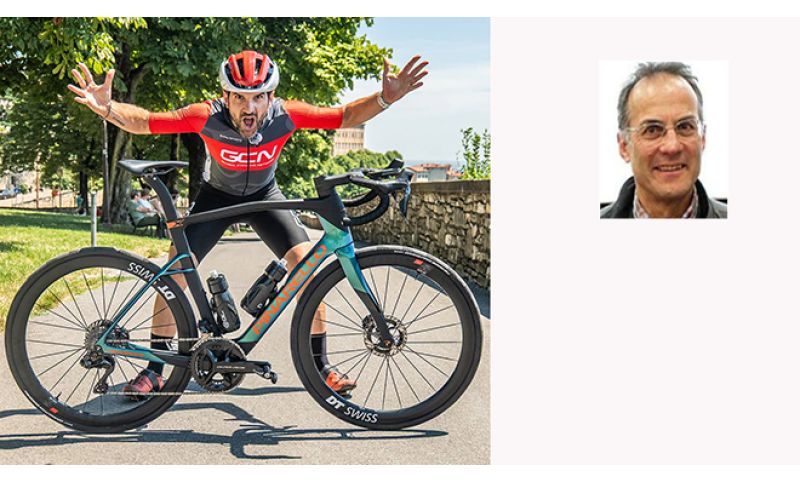
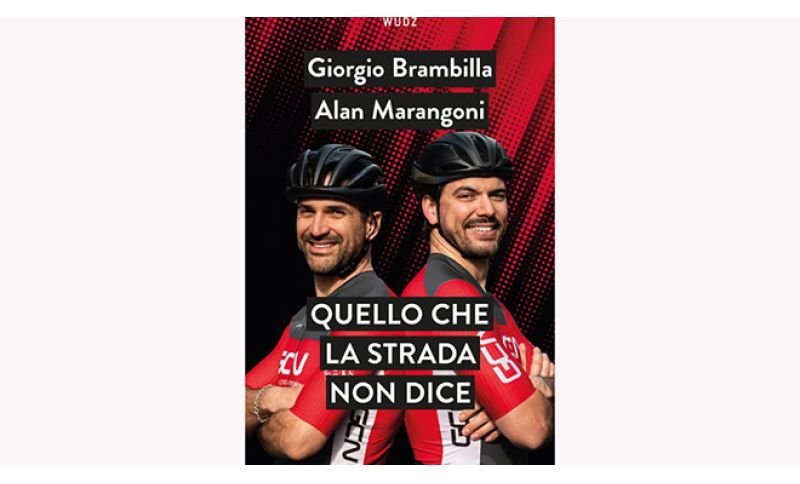
Alan Marangoni, the Maranga, also called the Trebbia, a nickname from threshing machine, in the sense of the width of his center of gravity, not very aerodynamic for a champion, but perfect for a domestique, in fact ideal for exploiting his slipstream and saving energy. Marangoni, voice and face of the YouTube channel GCN Italy, will be the guest of honor at the Slow Cyclist Festival, in Ferrara from tomorrow to Sunday (for all details www.ciclistalento.it). With Giorgio Brambilla he shares not only the light and entertaining yet at the same time deep and aware cycling broadcasting programs, but also the pages of "What the Road Doesn't Say" (Wudz, 214 pages, 20 euros), a book full of memories and stories, dialogues and lessons, confessions and confidences, advice and rules, beautiful, yes, beautiful, and different, yes, different, and in short unique, yes, unique in its sports and cycling genre, knowing that today sports books are no longer considered amateur and cycling books still represent the majority compared to those about football or basketball, rugby or fencing, even F1, provided that F1 can be counted among sports.
The Trebbia belonged to that generation of riders subjected to an alcoholic baptism ("In the morning I was a corpse. It was the first day as a pro of my life. I went down for the meeting with the team manager and I couldn't keep my eyes open") and to a raucous spirit ("We spent time together talking, laughing, even teasing each other"). The Trebbia was the star of an unforgettable stage of the Giro d'Italia, the Civitanova Marche-Forlì of 200 kilometers in 2015, started very well and ended very badly, fourth of four breakaway riders only because the fifth, victim of a puncture at the crucial moment, had been caught ("What happens after I experience it as if inside an aquarium," "I feel a tap on my shoulder, 'great Alan!', 'well done Alan!', 'you should have won it...' I'm in pieces"). The Trebbia finally rewarded by the god of cycling ("When I see the finish line I don't look back anymore. I don't need to. Because I know there's no one who will pass me this time").
"What the Road Doesn't Say," now, has been told. And it has been told and written as it should be. Brambilla and Marangoni are really good. Along the way, they were supported by Marco Amerighi who edited the text, Elia Viviani who wrote the preface, Luca Gregorio and Riccardo Magrini who added adjectives ("Witty, likeable, creative, professional, engaging"), captured the essence ("The heart is all in their story. Autobiographical and intense") and added compliments ("Their enthusiasm," "in a genuine way," "brilliant points of reference"). But we, but you, but everyone already knew or imagined, ever since, at the races, to eat piadinas and drink Lambrusco, we took refuge at the stall of the most generous fan club in global cycling. The Trebbia's, obviously.





















 Ritratti
 Oscar
 Albi d'Oro


Se sei giá nostro utente esegui il login altrimenti registrati.