

















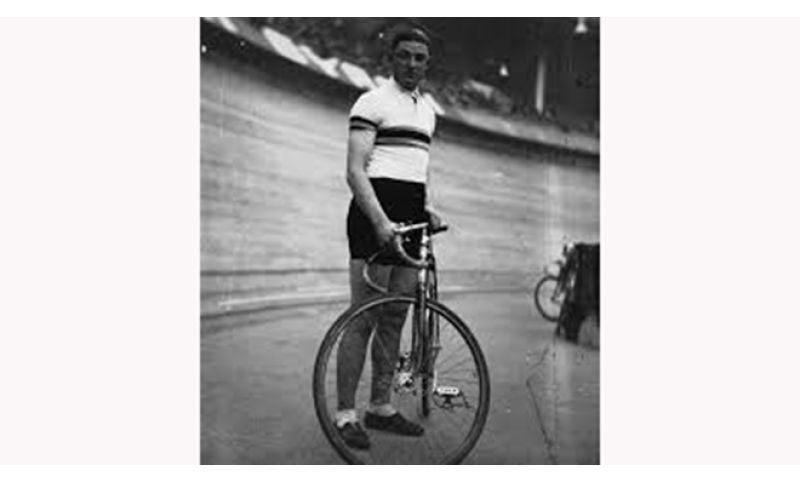
For nearly a century, no one has truly come close to Karel Kaers' record. The Belgian, winner in Leipzig on August 18, 1934, conquered the rainbow jersey at 20 years and 76 days, becoming the youngest world champion in the history of the men's road race. The correct reference is therefore 1934, not 1936.
That record could, however, change hands. On the eve of the road race at the 93rd World Championships, Frenchman Paul Seixas arrives with the ambition to write an unprecedented page in history: at the start he will be exactly 20 years and three days old. A victory would allow him to erase Kaers' record and become the youngest rainbow jersey wearer of all time.
Kaers achieved the feat over a 225.6-kilometer course, at an average speed of nearly 38 kilometers per hour. The Belgian beat Italian Learco Guerra in the sprint and his compatriot Gustave Danneels, also under twenty years old. A victory built in another era of cycling, but one that has remained intact in the memory of the World Championships.
Behind him, in the ranking of the youngest champions, is Jean-Pierre Monseré, world champion in 1970 in Leicester at 21 years and 342 days. The Belgian surpassed Dane Leif Mortensen and Italian Felice Gimondi after a race lasting over six and a half hours. A year later, in 1971, Monseré would die during a race in northern France, struck by a car while still wearing the rainbow jersey.
Just three days away is Lance Armstrong, world champion in Oslo in 1993 at 21 years and 345 days. Under relentless rain, the American won a race marked by crashes and retirements: of the 171 riders at the start, only 66 were classified. Armstrong arrived with a 19-second advantage over Miguel Indurain and Olaf Ludwig. The 1993 title remains in the records of the world championship, despite the American's subsequent disqualification for other results.
Fourth place belongs to Greg LeMond, who in 1983 conquered the title in Altenrhein, Switzerland, at 22 years and 70 days. By beating Adrie van der Poel, father of world champion Mathieu, LeMond became the first American and the first non-European rider to wear the rainbow jersey.
Immediately after comes Eddy Merckx, champion in 1967 in Heerlen at 22 years and 78 days. It was the first of the Cannibal's three world titles, and in his career he would collect eight top-ten finishes in thirteen participations in the world championship. On that Dutch day he beat local favorite Jan Janssen and Spaniard Ramón Sáez.
In the older history of the World Championships there is also a place for Georges Ronsse, winner in Budapest in 1928 at 22 years and 165 days. In a race reduced to just 16 starters and only eight classified, the Belgian dominated with over nineteen minutes' advantage over Germans Herbert Nebe and Bruno Wolke. Ronsse would confirm the title the following year in Zurich.
Completing the list is Remco Evenepoel, world champion in Wollongong in 2022 at 22 years and 243 days. The Belgian imposed himself with an extraordinary solo effort, leaving Christophe Laporte over two minutes behind. After three consecutive attacks, Evenepoel dropped his last pursuer approximately 25 kilometers from the finish, becoming the youngest rainbow jersey wearer of the 21st century.
Now it's Seixas' turn. The Frenchman starts with history before his eyes and with a record that seemed to belong forever to Karel Kaers. Nearly ninety years later, the rainbow jersey could have a new, very young owner.




 Ritratti
 Oscar
Oscar Albi d'Oro


Se sei giá nostro utente esegui il login altrimenti registrati.