















It was his father who took him to the races: "You would go, you would wait, you would enjoy that fleeting moment, then you would return, you would tell about it, you would remember it, until the next race". It was his father who passed on his passion for cycling to him: "One day, while waiting for the riders, people were talking. They asked him what he did. He summed it up: 'I work, I pray and I go watch the races'". It was his father who also passed on to him the desire to read cycling: "And on certain annuals I discovered his corrections, by hand, to the official finishing orders. Not third, but fourth. Not tenth, but ninth…". And it was his father who gave him his first bike: "An Olimpia, a racing bike. But I was already 18 years old".
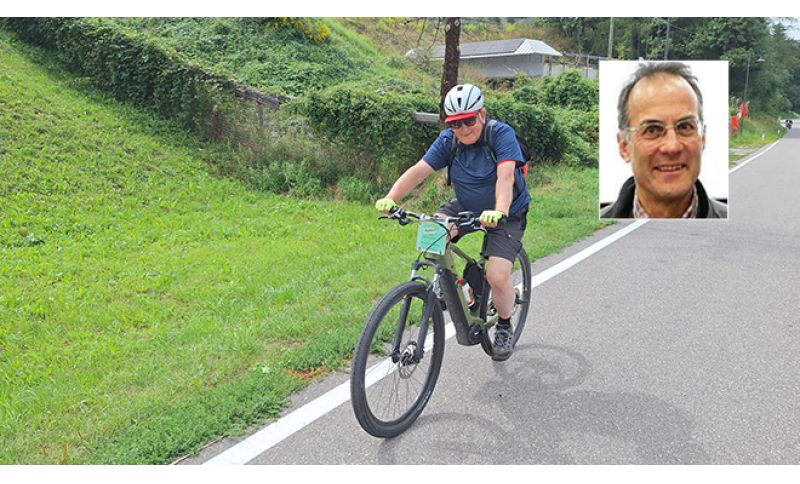
Today Don Antonio Cecconi professes himself a "believer non-practicing": towards the bicycle, mind you. Seventy-six years old, from Mezzana in Pisa, seven kilometers from the leaning tower of Pisa (four as the crow flies) heading east towards Monte Serra, classical high school Galilei in Pisa, the seminary, five years of theology, priest since 1974, assistant priest, national vice-director of Caritas, vice-bishop complaints office, a sort of Tano Belloni in the sense of the Eternal Second, now officially retired, if that's what you can call someone who still devotes himself to the elderly, disabled, disadvantaged, Acli…, but the qualification of domestique would fit well too. And also, and still, and always, the bicycle and cycling.
The first rider? "Fiorenzo Magni. It was the 1956 Giro d'Italia, the one in which 'the Lion of Flanders' fell, broke his shoulder, tied – it was Ernesto Colnago who invented the contraption – a half tire from one side wrapping it around the handlebars and on the other biting it between his teeth, and in the end he finished second. That day the Livorno-Lucca time trial was being raced and the group passed just a few kilometers from home, but I was in bed with measles. So my father went alone, then told me who he had seen. Magni, suffering, Charly Gaul, Miguel Poblet and Pasqualino Fornara in the pink jersey".
The first hero? "Guido Carlesi, from Livorno in Collesalvetti, then from Pisa in Titignano, nine kilometers from Mezzana (but three as the crow flies), second at the 1961 Tour de France behind Jacques Anquetil but ahead of Charly Gaul. Carlesi was an unfinished work. In fact he remained Coppino. He liked hunting, he also liked women, and in short he didn't live the life of a cyclist, which is a bit like that of a monk. I have kept a Molteni cap of Carlesi's. Like the relic of a saint rather than a hero. May he rest in peace".
The first saint? "Francesco Moser, but saint is too much. When he came to race in the Bottegone, he was converted into a Tuscan rider, and here, so to speak, if not sanctified, at least beatified. Preceded by the reputation of all his fellow riders, Francesco shone for his qualities and abilities, especially tenacity and endurance. I followed him wherever I could, even in Ostuni, second at the 1976 World Championships behind Freddy Maertens".
Cycling as human divine comedy: "Francesco Doccini, from Terricciola in Pisa, about forty kilometers from Mezzana, born in 1914 like Gino Bartali, a couple of years as a professional. There was a story about that amateur Casentino Giro. On the Consuma, the climb from the Florence side, ninety kilometers from the finish, an unknown rider broke away. 'Let him go – said Doccini – where do you think that skinny-legged guy is going?'. Instead he won by a large margin. It was Fausto Coppi". Cycling as the art of encounter: "Cesare Del Cancia, from Buti in Pisa, 17 kilometers from Mezzana (five as the crow flies, and the air is that of Serra). I saw him when the Giro arrived in Versilia, Del Cancia was then the oldest living pink jersey wearer". Cycling as a metaphor for life: "Tiarno Casarosa, mechanic at the Fornacette velodrome and sports director who brought Carlesi to professionalism, told of a time, at the beginning of October, it was already cold, 'do you want water?' he asked one of his riders, the rider replied 'give me a gun so I can kill myself!'". Cycling as a treasure chest of memory: "A meeting right in Fornacette for various categories, Coppi was also there, who said to Leonello Canesi, a young rider, 'I see you have a nice bike' and asked 'Who made it for you?', Leonello replied 'A craftsman from here, Alberto Cecconi', my father, that is".
Don Antonio Cecconi is a formidable cyclist of memory: "On pilgrimage for cycling, on the Abetone and the Mortirolo, on the Manghen and the Fedaia, in Pinzolo in 1999 the day Marco Pantani triumphed before the famous Madonna di Campiglio check. Also at the 1980 Sallanches World Championship, where Hinault was first and Baronchelli second. Also at the Cuneo-Pinerolo in the 1982 Giro, when Beppe Saronni beat Moser…". Even a journalist: "During a Giro d'Italia for the 'Tirreno'. Even an agent: "I asked Franco Bitossi to be a reader in an audiobook about Gino Bartali, we needed someone with a beautiful Tuscan accent, and Franco agreed".
And the bike, a temptation? Don Antonio Cecconi confesses: "Temptation, penance, communion… No longer the racing one, but now electric-assisted, twice a week. By now a believer non-practicing".



 2
2
 2
2
2
2
2
2

 Ritratti
 Oscar
Oscar Albi d'Oro


Se sei giá nostro utente esegui il login altrimenti registrati.