
























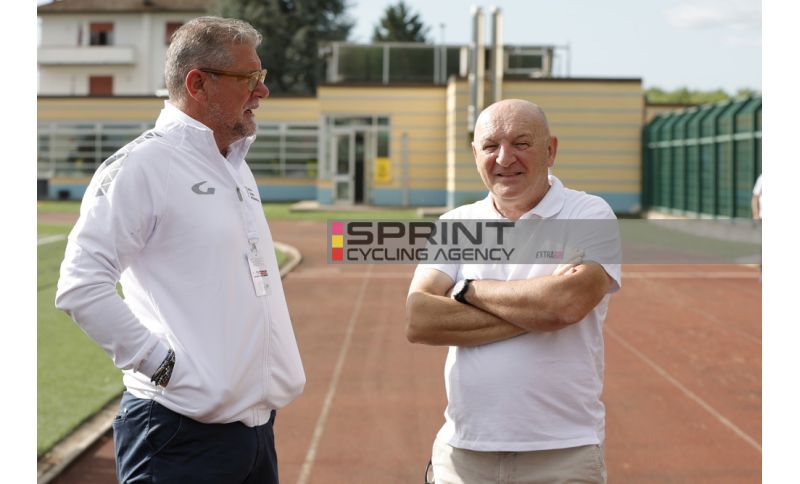
With his team, he organized the Imola 2020 World Championships, an event organized in record time that received compliments from the IOC, along with many other events before and after the covid challenge. Marco Selleri, president of ExtraGiro Race, posted an alarm call on Facebook that is worth sharing to invite reflection from the entire cycling community.
We report in full his call for action, which we hope will spark reflection among all parties involved:
"Increasingly difficult: these have now become three words that represent normality for those who occupy the first two positions in the supply chain necessary to guarantee the holding of cycling races: organizers and teams.
On one hand, there are increasingly complex UCI regulations, growing administrative requirements, ever-heavier responsibilities, and rigid timelines to respect. Just consider that reimbursements to teams must occur within days of the race, often at most within thirty days. A clear, precise, immediate deadline.
On the other hand, however, there is the economic reality that organizers must deal with every day. Races are increasingly organized with public funds, because private sponsors have been reduced to a minimum and finding resources has become increasingly difficult.
The problem, for those unfamiliar with it, is simple only in appearance: public money, when it does arrive, comes after 240 or 270 days. Before that, you must advance funds, pay, demonstrate, account for everything, and only at the end collect payment.
In practice, the organizer must act as a bank.
And this is where an enormous contradiction arises. On one hand, the organizer is expected to meet immediate deadlines, make rapid payments, provide efficient services, maintain ever-higher standards, and respond promptly. On the other hand, that same organizer must wait months before recovering the promised or allocated sums.
Added to this are all the activities that "follow in the wheel": services, professions, operational figures, and realities connected to the race. Many are indispensable, no one denies that. But if the current economic system imposes long timelines, waiting periods, advance payments, and cash flow difficulties on the organizer, then perhaps those who revolve around the race should also align themselves with this reality.
You cannot always demand everything from the organizer. You cannot ask for immediate payment, perfect service, single rooms, convenient logistics, rapid reimbursements, and ideal conditions, while the organizer is forced to advance everything and wait almost a year to recover expenses.
For this reason, I feel compelled to say something simple: if everyone wants to continue being part of the system, then everyone must understand how that system works today. If the organizer must wait, perhaps others should also learn to wait.
And paradoxically, if we all wait, things probably move forward. Because the problem is not to dump difficulties on someone, but to share them with a sense of responsibility. Only this way can we continue to guarantee the existence of races, without leaving all the weight on the shoulders of those who organize them.
Cycling has changed, this is evident. But perhaps someone should remember that its strength has never been in demanding privileges, but rather in knowing how to adapt, in respecting the work of others, and in recognizing that a race does not begin on the day of the start: it begins months earlier, among authorizations, accounts, advance payments, responsibilities, and nights spent making everything add up.
The central phrase, in my opinion, is this: "In practice, the organizer must act as a bank." It is direct, understandable, and perfectly summarizes the problem".

 2
2


 2
2


 1
1
2
2
1
1
2
2

 Ritratti
 Oscar
Oscar Albi d'Oro

