
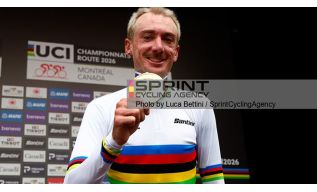
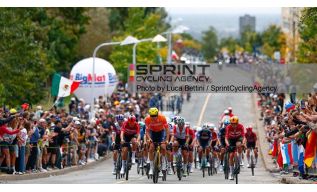
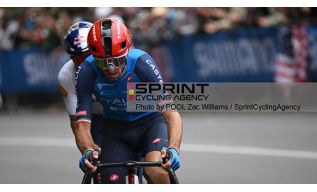
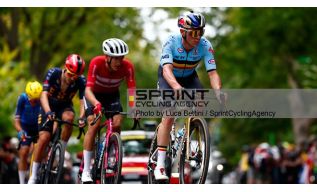
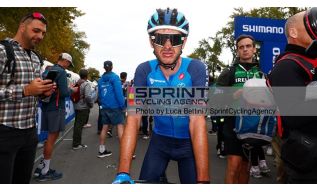
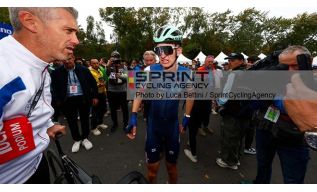
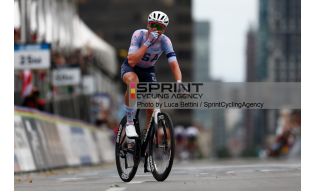















Tadej Pogacar continues to amaze the cycling world with performances that defy human understanding. Recent studies conducted by a team of three international researchers have estimated his VO2 max at a value between 94 and 98 ml/kg/min, among the highest ever recorded in the history of cycling. A value practically never seen before, incredibly high. This data measures the maximum amount of oxygen that the body can absorb during intense physical exercise and is a crucial indicator of athletes' endurance capacity. It is measured in milliliters of oxygen per kilogram of body weight. Oxygen consumption increases with increasing effort; at a certain point, a threshold is reached that can only be sustained for a brief period. This is the value of VO2 max. The higher this threshold, the longer one can sustain intense performance.
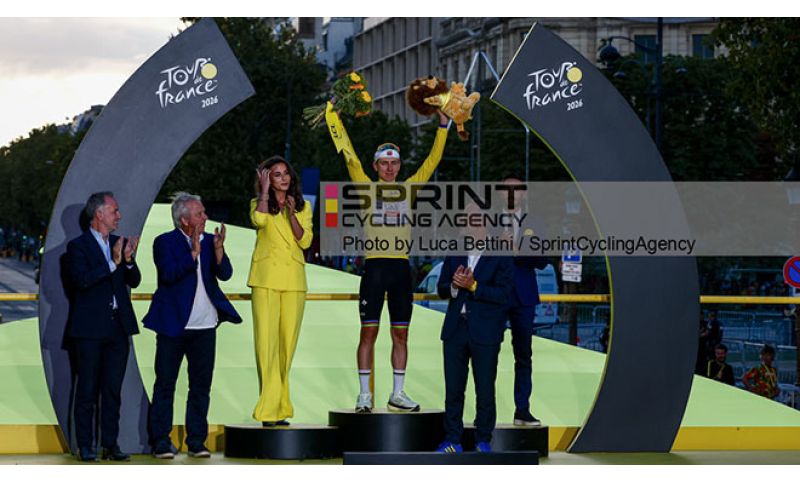
Pogacar's VO2 max, who has just won his fifth Tour, is extraordinary, considering that a "normal" professional is found around values of 80 ml/kg/min. To give an idea of the magnitude of this number, Greg Van Avermaet had a VO2 max of 78, while Mathieu Van der Poel reaches 86. In the past, the VO2 max data of Miguel Indurain, who touched 88 ml/kg/min, or Greg LeMond, famous for his record value of 92.5 ml/kg/min are known. The estimate of Pogacar's value, based on data collected during the Slovenian's performances on some of the most iconic climbs, was elaborated with care: using a mathematical model, the researchers inserted numerous factors to arrive at an estimate that, although not official, is extraordinary for its boldness. Only Pogacar and his coach know the official data. The study will be published shortly in the prestigious journal International Journal of Sports Physiology and Performance.
How did the researchers proceed with Pogacar? They thoroughly analyzed publicly available data. They selected four climbs where Pogacar dominated unchallenged: Plateau de Beille and Isola 2000 at the 2024 Tour de France, Peyragudes at the 2025 Tour and the Passo di Ganda at the 2025 Giro di Lombardia. They chose precisely these climbs because they present ideal conditions for maximum physiological effort and provided a perfect context for analysis. For example, the Peyragudes climb was a time trial, the others are at high altitude and the Passo di Ganda is part of a grand classic. All factors that, according to the researchers, "offer the maximum possibility of maximum physiological effort". The researchers took into consideration a myriad of parameters: Pogacar's mass with the bicycle, air resistance, rolling resistance and a series of other factors. Some factors had to be estimated, such as Pogacar's exact weight at the time, which naturally made their results slightly less precise. They inserted all this data into their mathematical model and the results were nothing short of surprising. Pogacar's VO2 max was estimated between 94 and 98 ml/kg/min, with an average of 96 ml/kg/min.
To validate their model, the researchers compared it with Chris Froome's VO2 max, known to the public. The British four-time Tour winner, reached 84.4 ml/kg/min in a laboratory measurement; their estimate turned out to be 85.3 ml/kg/min. So the values are very close and this verification gave the researchers greater confidence in their results. Of course, until Pogacar's values are made public, their result remains only an estimate, but it is clear that his VO2 max represents an unparalleled competitive advantage in the current cycling landscape.
As the public eagerly awaits the official publication of the data, the mystery surrounding Pogacar's physiology slowly unveils itself. With values that exceed all expectations, the Slovenian champion is not just a talented cyclist, but an athletic phenomenon that redefines the limits of human endurance. His extraordinary ability to absorb and utilize oxygen is not just a number, but a lethal weapon in a competition where every watt counts and every meter is a battle to be won.

 25
25


 25
25


 7
7
4
4
2
2
2
2
2
2
42
42
3
3
7
7
4
4
2
2
2
2
2
2
42
42
3
3

 Ritratti
 Oscar
Oscar Albi d'Oro

