

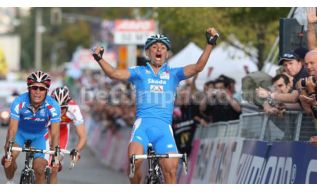
















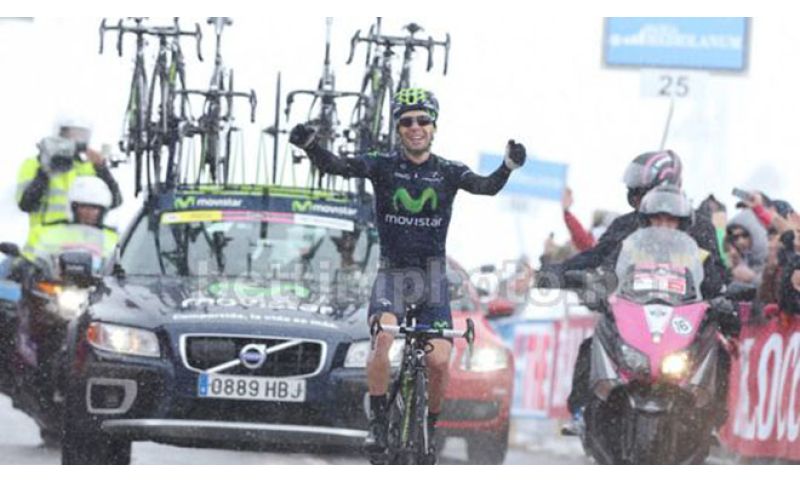
I returned to the Galibier to experience the passage of the last Tour de France. A summer day, with bicycles and fans arriving from every corner of the world. Yet, as the road continued to climb, in my head there was a different image: Giovanni Visconti alone in the snow, at the 2013 Giro d'Italia.
I remembered the feat, the snow-covered Galibier, the finish near the monument dedicated to Marco Pantani. However, I didn't fully understand the story hidden behind that victory. A story that concerns not only cycling, but mental health, the fear of losing everything and the possibility of finding yourself again when it seems most difficult to do so.
«That was the turning point of my career,» Visconti says today. «My career was burning because of a very difficult period. I was coming out of a year of crisis, panic attacks and anxiety attacks. I couldn't manage them and things were going badly. In cycling, if results don't come for an extended period, they don't wait for you forever. I was also without a contract for the next season and I felt a bit abandoned to myself.»
That morning, before the start, he had joked with Stefano Allocchio: «I told him: 'I'm winning today.' I threw it out there as a joke, because it seemed almost impossible.»
The race, however, immediately confronted him with the same problem that had accompanied him for months. On the Moncenisio, when Stefano Pirazzi attacked and Visconti tried to follow him along with Pieter Weening, another panic attack arrived.
«It was all as usual, as planned, let's say. I had joked at the start, but that attack made me realize it was going to be a mess.»
Yet, right there, the day slowly began to change direction. «I don't even know how, but I managed to get through that moment. I finished the climb and found myself alone between the breakaway and the main group. On the descent I started breathing a bit better, I recovered and, little by little, without attacking and without making any more explosive efforts, I managed to catch up with and then drop everyone on the Télégraphe. From there I flew alone toward the finish line, managing to maintain a good margin and resist the comeback of the general classification riders.»
It was not just a great racing move. It was the moment when a rider who feared he had reached the end managed to reclaim his career. «I could have even quit. Instead I made it that very day, right during another panic attack. And then, two days later, I won again in Vicenza, with one of the most beautiful and authoritative moves I remember among my victories. The Galibier was a real turning point.»
There were also coincidences capable of making that day even more difficult to forget: the climb linked to the memory of Marco Pantani, the fact of being born on the same day as the Romagna champion, a finish reached in the middle of snow just when everything seemed about to slip away from him.
But the value of his story doesn't lie in the rhetoric of the hero who defeats his own fears. Visconti doesn't talk about having won panic attacks through sheer willpower. He talks about managing to get through that moment, regain his breath, adapt his way of racing and continue.
Today he observes cycling from a different perspective. He works with young riders, especially in the junior category and sees boys grow who are asked to become professionals earlier and earlier. His personal experience allows him to recognize with particular sensitivity what can happen when sporting pressure meets invisible fragility.
«Today the situation can be even more critical. Riders are more monitored, more supported and, in a sense, more pampered as athletes. They have everything they need to focus on the bike. But, as people, they can be more fragile than in our time.»
Visconti doesn't say he already sees the same problems in juniors that he went through himself. He does see, however, conditions that over time could make those boys more vulnerable.
«I don't necessarily see boys who already have panic attacks. But I do see a predisposition that, after a few years, could lead them to fall into that type of problem. There's much more stress, much more professionalism. Professionalism is a positive thing, but at certain ages it can cause considerable mental pressure.»
Then there are social networks, which have changed the amount and speed of judgment that reaches an athlete. «They're a double-edged sword, but very often it seems they have only one edge: the one that hurts you. In good times they praise you, but it takes just one bad period for them to start tearing you apart. And that tearing can last a long time. Then you have to be good at getting out of it.»
Visconti knew the pink jersey and the responsibilities of the top level when he was still at the beginning of a long career. Contemporary cycling, however, has further anticipated every transition. Talent is identified, measured and courted already in the junior category. And tomorrow it might be too late even then.
«I mainly follow juniors, now it seems almost unnecessary to go and watch amateurs even though in reality there are many riders who need that extra year or two to emerge and who unfortunately are no longer waited for. The idea is spreading that if you've reached the amateur category without already being selected, then it means you have no future. In a few years the same thing could happen with juniors: if as a youth rider you don't already have contacts and as a junior no one is looking for you, you risk feeling left out before you've even really had time to grow and understand what cycling is.»
It's a race within the race: being noticed before others and immediately reaching the peak.
«That's what scares me most. I see them too focused, too concentrated on having to reach the maximum right away.»
It's not nostalgia for an idealized cycling. Visconti recognizes how much athlete preparation and support have improved. However, he asks that the same precision applied to the body be dedicated to the person as well.
«You need to have the right people around during growth, even within teams. Some organizations are already introducing figures that help boys on this level, but in my opinion this part needs to be implemented even more. You can't work only on the physical level. You need to be able to maintain the mental level adequately as well.»
On the Galibier, in 2013, Giovanni Visconti didn't just win a stage of the Giro d'Italia. That mountain gave him back the possibility of continuing to be a rider. He didn't defeat fear forever. He went through it.
He regained his breath, avoided the explosive efforts that could put him in difficulty again and continued to pedal at his own pace. He won in the snow. The career that seemed about to fade away continued for many more years.
Today he watches increasingly young boys race toward professionalism. He looks for legs and talent, but he knows that no number can fully tell what happens inside a person.
Perhaps the deepest legacy of his Galibier is precisely this: knowing that even a rider advancing alone toward a legendary victory can be engaged in a battle that, from the outside, no one can see.

 3
3


 3
3


 1
1
1
1
1
1
1
1

 Ritratti
 Oscar
Oscar Albi d'Oro

