















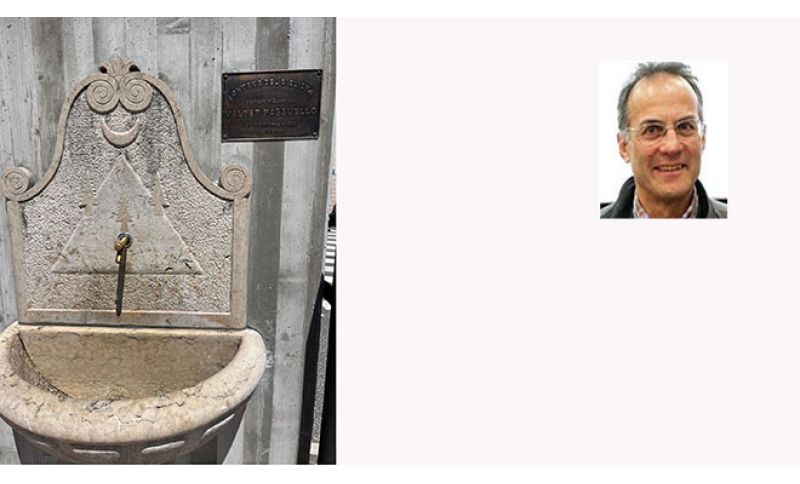
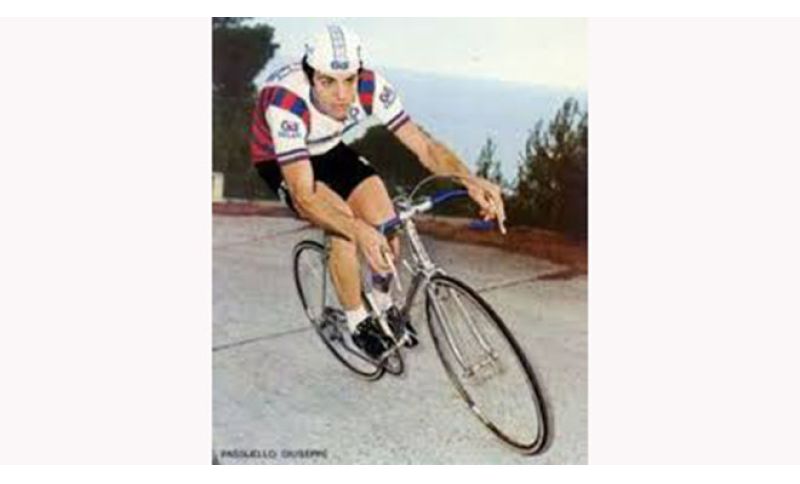
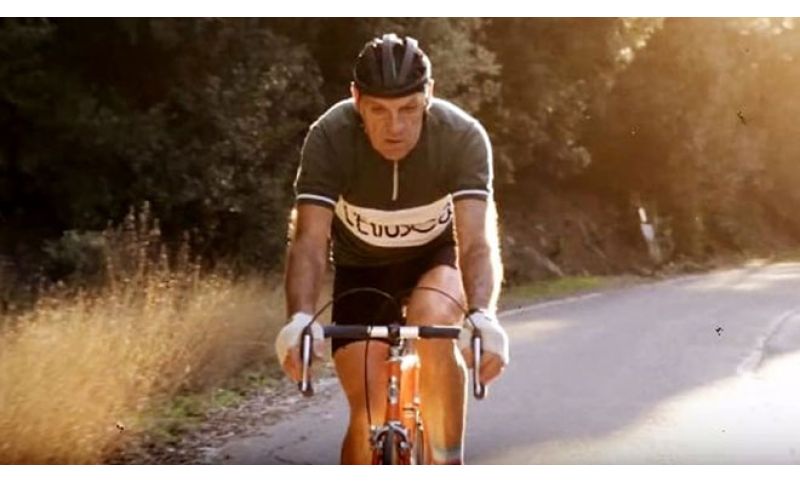
Three firs, a quarter moon, a frame that resembles a smiling woman, a tap and a semicircular basin. The cyclist's fountain in Lusiana Conco, on the Altopiano dei Sette Comuni in the Vicenza region, is a starting point, a passage and an arrival, a place to refuel and, since it was dedicated to Giuseppe Walter Passuello, also a place of pilgrimage.
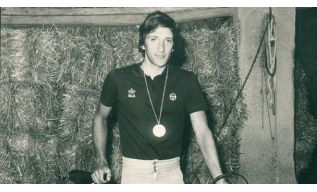
Giuseppe by first name, but Walter to everyone, Passuello with no relation whatsoever to Adriano the cyclist of the Sixties and Seventies, also from Vicenza but from Longa di Schiavon. It's true that – it was 1977 – when Adriano retired, Walter was starting out, and it seems the two Pasuellos crossed paths, if at all, just once. Walter was born, indeed, in Lusiana, but in some sources, for example on procyclingstats.com, it's written that he was from Milan, where the family had moved when he was still a child. Life would later take him to Livorno, but without ever picking up or losing an accent: for as little as he spoke, he did so in Italian.
In Lusiana, with barely five thousand inhabitants, Passuello is considered the champion: he made it. Ten years as a professional, six Giros and one Vuelta, the classics of the Italian and international calendar. A domestique, one of the luxury kind, for Gavazzi and Moser, for Saronni and De Vlaeminck, and he was more closely bound to these last two by affection and esteem. "With De Vlaeminck – Domenico specifies – he had devised rudimentary techniques of scientific training, something that approached SFR, climbing force endurance, more due to experience than research, more to sensations than data, more to word of mouth than sacred texts". No individual victories, one team victory (in the team time trial in Abruzzo with Moser), at least four second places (one also at the Vuelta in 1978), a third (at the Melinda in 1985) and a fifth (at the Giro in 1981, the Pavia stage won by Gisiger). Regrets? "Never heard him complain – confides Domenico Passuello, a son of the sport, first in cycling, then in triathlon, and still here as an athlete and coach -. I sensed he was disappointed when, perhaps it was 1984, he had performed well at the pre-worlds and placed very well, but then the call-up to the Italian national team never came".
"I remember him at Cerreto Guidi, in Tuscany – says Beppe Saronni – in 1976, we were still racing as amateurs. I was in a breakaway with him, Mazzantini and Barone, all three from Chima Castello, a powerhouse team. On the last climb I attacked and won: for them it was a great blow and a small tragedy. But later we would laugh about it a lot, together, every time we saw each other again". "After his professional career ended, we ran into each other at some gran fondos and historic rides – says Francesco Moser -. Walter trained more seriously than us, he dropped us like we were children and arrived a quarter hour ahead of us". He had already opened a bicycle shop in Livorno, Walter, on the Scali delle cantine, on the Pontino, and here he would work right up to the very last moment. It was 2020, he was 68 years old. His heart.
Who would have ever thought it, he seemed like a man of iron. "Instead – Domenico recounts – we later learned that sometimes, on his bike, he had already had some problems. He had underestimated it, or neglected it, or downplayed it. No tests, no check-ups". He remained bound to the bicycle (and to cycling) by genuine passion: short rides at lunchtime even alone, the more serious ones on Sunday mornings with the usual friends, first the gran fondos, then when they became competitive, better the historic rides.
And now the cyclist's fountain, dedicated to Walter, in his Lusiana. That fountain is the symbol of cycling. The effort. But also happiness. A source – always – of life.



 7
7
 7
7

 Ritratti
 Oscar
Oscar Albi d'Oro


Se sei giá nostro utente esegui il login altrimenti registrati.