




















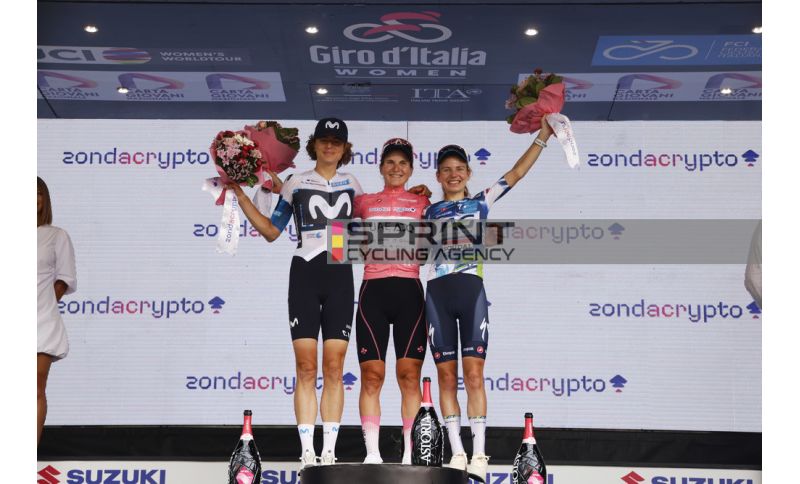
The Giro d'Italia is not yet finished, but it's already time to dive into the women's pink race. 1177 km, from May 30 to June 7, unprecedented dates for one of the most important stage races in the world. Thanks to the calendar shift, many athletes have chosen to come to Italy and battle it out over nine stages to compete for the pink jersey.
From Saluzzo to Cesenatico, there will be nine intense days with beautiful scenery, but above all stages suited to all tastes. It's not a prohibitive race, but particular attention will need to be paid to the intermediate stages that could hide pitfalls around every corner. The first three days of racing are very straightforward and on paper are perfect for the sprinters in the peloton. In the opening stage, the athletes will pedal through the Romagna plains and will compete for the first pink jersey in what will certainly be a sprint finish. Time bonuses could make the difference on the following day; the Roncade – Caorle stage is once again suited to the sprinters. The Bibione – Buja stage should also reserve a similar finale, but watch out for the Montenars climb: it's just under 2 km, but there are sections at 16% that could hurt. The finish line is 21.3 km from the summit.
The Giro Women gets serious already in the fourth stage, an individual time trial, or rather a true time trial climb that will certainly completely reshape the standings and hand us a new pink jersey wearer. The 12.7 km from Belluno to Nevegal are almost entirely uphill, the first real challenge of the race and one destined to leave its mark. The following day there will certainly be no chance to catch your breath, quite the opposite. In this all-Veneto stage, four categorized climbs will be tackled, the finish in Santo Stefano di Cadore is all downhill but riders will have to deal with their remaining energy reserves.
The sixth stage finishing in Brescello will be the last opportunity offered to pure sprinters; the next day, the Sorbolo Mezzani – Salice Terme stage has a climb 27 km from the finish that could put some athletes in serious difficulty. The victory in the Giro will be decided in the final two days which will be raced entirely in Piedmont. The eighth stage is effectively the queen stage of this edition with the ascent of Colle delle Finestre and then Sestriere, two climbs symbolic of cycling perfect for pure climbers. The queen of the pink race will be crowned in Saluzzo, a stage that's not prohibitive, but quite eventful. In case of small gaps, it could really make the difference.
Below are the stages in detail
May 30 Stage 1 Cesenatico – Ravenna 139 km
A day entirely dedicated to the sprinters that will award the first pink jersey. The stage is completely flat and a sprint finish is practically guaranteed. After the start from Cesenatico, a straight section will be covered until Ravenna where three laps of a city circuit will begin. The athletes will pass under the finish line 4 times and will thus have the opportunity to study the finish well. There's a long straightaway, but watch out for a U-turn about 2.2 km from the finish; it will be essential to have the right position and not be caught off guard. This first Romagna stage is ready to crown the first queen of the Giro.
May 31 Stage 2 Roncade – Caorle 156 km
Another stage perfect for sprinters, racing will take place between Veneto and Friuli Venezia Giulia, but the stage is not completely flat. After 65 km, the Muro di Ca' del Poggio will be tackled, an iconic short climb of just over one kilometer but with an average gradient of 12.3%; the first to the top will also become the first leader of the climbers' classification. The summit is very far from the finish and the climb shouldn't put the sprint finish in doubt. After a downhill section, the final 50 km are completely flat until reaching Caorle. In the absence of real gaps, time bonuses could make the difference for the pink jersey.
June 1 Stage 3 Bibione – Buja 156 km
From the sea at Bibione to the Friuli hinterland with Buja, this stage, while very easy, might not be straightforward at all. After the start, the peloton will tackle a long flat section that leads to the intermediate sprint at Villa Manin di Passariano; the road will begin to climb slightly until the categorized climb at Moruzzo. The following kilometers will be a continuous series of ups and downs until the categorized climb at Montenars, the last real climb of the day positioned about 22 km from the finish. At this point, you'll need to carefully count which athletes remain in the group or, if there's a breakaway, try to react.
June 2 Stage 4 Belluno – Nevegal 12.7 km (time trial)
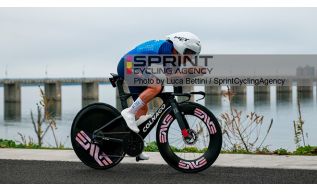
At the Giro Women, things get serious with the highly anticipated individual time trial climb that will certainly revolutionize the general classification. The route follows the famous time trial from the 2011 Giro dominated by Alberto Contador and won't go easy on anyone. The actual climb is 11 km long with an average gradient of 6.4%, but in the central section the ascent reaches peaks of up to 15%. It's the perfect day to start getting your hands on the race and to send a clear message to your rivals. There could already be significant gaps, but it will be interesting to see how riders manage to recover from this first climb of the race.
June 3 Stage 5 Longarone – Santo Stefano di Cadore 146 km
Another difficult stage at the Giro Women especially because it comes the day after the time trial. The route is entirely in the province of Belluno and features 4 climbs that aren't necessarily prohibitive, but could hurt. It starts with Passo Tre Croci, positioned after about fifty kilometers (7.9 km with an average gradient of 7.2%), then a long descent will lead to Auronzo di Cadore where climbing will resume toward Passo di Sant'Antonio (8.3 km with an average of 7.5% and peaks of 15%). The race will then tackle the double ascent of the Costa climb, just 4 km, but with an average of over 9%. At the last summit, there will still be 16 km to the finish, then it's all downhill. Many athletes in the peloton are thinking only about the Sestriere stage, but this day in Veneto, precisely because it's underestimated, could cause significant damage.
June 4 Stage 6 Ala – Brescello 159 km
After so much climbing, another great opportunity returns for the sprinters and it could even be the last one. The Ala - Brescello is one of the longest stages of the race, almost completely flat; a sprint finish is practically assured. It certainly won't change the pink jersey wearer, but the cyclamen jersey holder could change.
June 5 Stage 7 Sorbolo Mezzani – Salice Terme 159 km
Another stage that's difficult to interpret and could present a rather eventful finale. The stage is completely flat for the first 110 km, then the road will begin to climb until the categorized climb at Pietragavina. It's a rideable third-category climb, but it could become the launching pad for some attacker wanting to shake things up. The final 27 km are all downhill to the finish and perhaps the women in contention will want to take advantage to conserve energy ahead of the complicated stage the next day.
June 6 Stage 8 Rivoli – Sestriere 105 km
The queen stage of this edition of the Giro, 2800 meters of elevation gain for a day destined to revolutionize the general classification. The first part of the race is fairly straightforward, but from kilometer 60 it will be the opposite. The race will tackle two climbs symbolic of cycling starting with Colle delle Finestre, an 18.5 km ascent with an average gradient of 9.2%. The Cima Coppi of this edition is a long and regular climb, but watch out for the second part: the final 9 km are all on gravel. At the summit, there will still be 27 km to the finish and some athletes might already make their move here. After a challenging descent, the final 16 km are uphill to Sestriere. The climb is straightforward and regular, but could be decisive.
June 7 Stage 9 Saluzzo – Saluzzo 145 km
It won't be a simple procession, quite the opposite. The final stage of the Giro Women has 2200 meters of elevation gain and the classification could change again. On paper it's a perfect day for attackers, but coming at the end of the pink race everyone will want to take advantage for one last assault on the symbol of supremacy. After 46 km, the climbs of Montoso (8.9 km at 9.4%), Coletta di Paesana and finally Colletta di Brondello (6.9 km at 6.5%) which ends 38 km from the finish will be tackled in order. This route reminds us of many of the Ardennes classics and, in case of small gaps, we could witness a real final twist. In Saluzzo, the winner of the 2026 Giro Women will be crowned.

 1
1


 1
1


 4
4
4
4

 Ritratti
 Oscar
Oscar Albi d'Oro

