
















This premise, along with what follows, is somewhat driven by the fact that the Executive Committee of the Union Cycliste Internationale, on the occasion of the 2026 World Championships in Canada, announced that in the track program for the 2027 World Championships to be held in France, in the Haute-Savoie department, motor-pacing or stayers will be reintroduced, more than thirty years after their abolition following the 1994 event at the Palermo velodrome, the motor-pacing discipline, as you wish to call it. Motor-pacing is a "veteran title," being the first world championship organized back in 1895. Now it is being reintroduced with the official denomination, obviously in English, of "motor-pacing," quite another thing...
Men will compete and, an almost unprecedented novelty, women as well, even though at the last European Championships under the aegis of the UEC (European Cycling Union), last July, at the Bottecchia Velodrome in Pordenone, continental European titles were awarded – men and women – both in derny and in stayers. A decision by the UCI that fits within the constant and continuous proliferation of specialties, both on the road, on the track and also in off-road cycling.
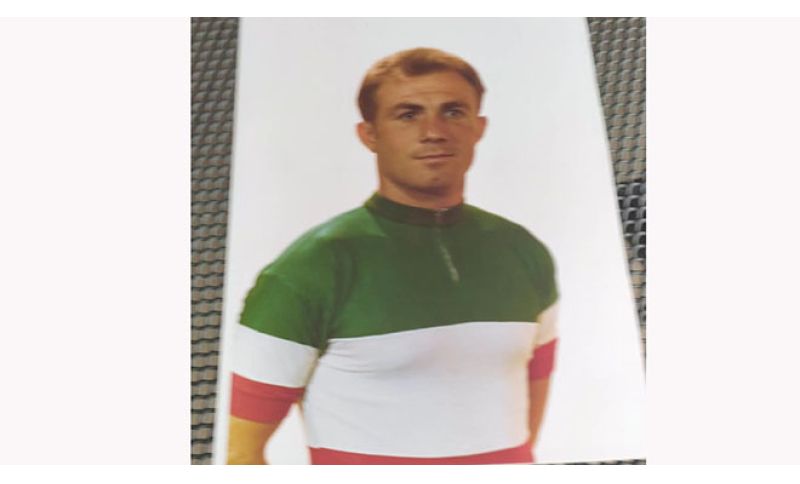
It is a story that intertwines Sacile, a beautiful center in lower Friuli, with Milan, one that characterizes a well-known cyclist of the 1960s, alternating between road and track. We are talking about Antonio Carniel, born in Sacile on June 20, 1944, with his father who had moved from Friuli to Milan in 1925 and married in the Lombard metropolis. Then, during the Second World War, with his Milan home destroyed by bombing, he returned as an evacuee to Sacile and therefore, after the war ended, again to Milan, in the Via Imbonati area, in the Dergano district, where Antonio Carniel grew up, a butcher's apprentice and a very young passionate cyclist. Also living here was the Veronese sprinter Giovanni "Vanni" Pettenella, practically a contemporary and almost a colleague in Carniel's extra-cycling work as well. In fact, the late Vanni helped in the family poultry shop with home deliveries by bike, he who later became a multi-medaled sprinter with gold in the sprint at the 1964 Tokyo Olympics.
Antonio Carniel raced for two seasons in the Zanazzi-Gaslo team directed by the eclectic Renzo Zanazzi and in 1960 also won a classic for his category, the Milano-Marcolina, a climb known in cycling but with brief and not impossible gradient, in the municipality of Lozza, in the province of Varese.
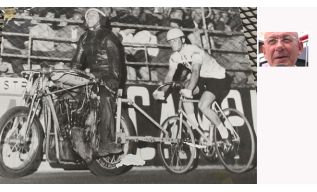
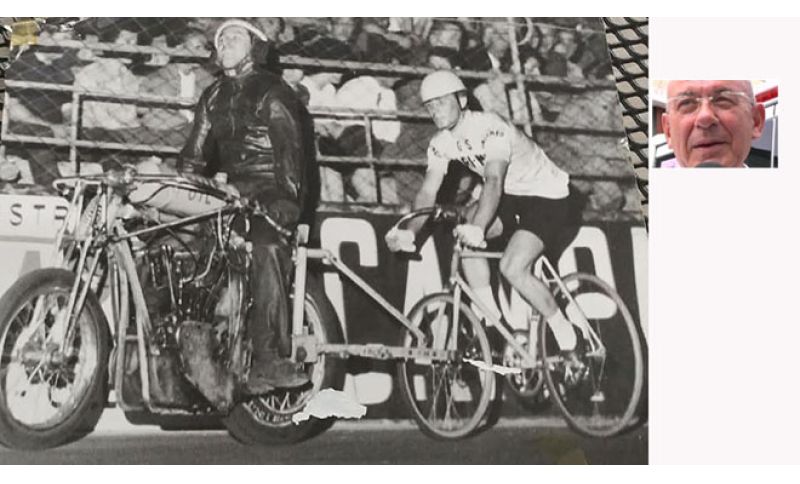
Then, gradually, he wore the jersey of the Cademartori of Mariano Comense guided by Gino Longoni, then moved to the Negrini of Cinisello Balsamo as an amateur with subsequent move to Nucleovision with teammate Costantino "Tino" Conti, his friend, and then to Telewatt, the new name of the Nucleovision team. Followed by a move to Dari Mec of owner Mario Dagnoni who was also his reference coach on the motorcycle with the old Bac motorcycles and Meyer bikes with engines ranging from 1500 to 2000cc in the stayer specialty races.
As a stayer, he becomes Italian amateur champion in 1967 at the motorcycle roller guided by Mario Dagnoni and, the following year, finishes sixth in the world final of the same category.
His last year as an amateur, 1968, sees him racing for the Brianza team Sagit of Tregasio, a hamlet of the municipality of Triuggio. And with Sagit of the passionate owner Giuseppe Sala he makes the jump in 1969 among the professionals. The team was guided in the team car by Ludovico Lissoni and Carniel remembers that he was particularly careful about saving, so the sandwiches from the supply bag, as was customary during races, were often made of lots of bread and little filling. In his first year with Sagit, Carniel breaks his femur and has his season compromised.
In the top category, he still wears the Italian jersey at the world championships and is second at the Italian championship held in Forlì, on the cement track of the Glauco Servadei Velodrome, and still remembers the "surprise" discovery at the end of the race, already in the locker room, of finding that the locks of his bike's rear wheel were almost blocked by a "guilty hand," knowledgeable in the matter, which Carniel nonetheless does not reveal, even after many decades, not having conclusive proof. Cases and things not infrequent in the specialty, after all. A hidden battle conducted also off the track beyond those, always somewhat rustic, with overtakes, counter-overtakes and feints to drop opponents while pedaling in the circles.
His last dance as a professional is with the Zonca Lampadari of Voghera of the three very passionate brothers with Ettore Milano leading the technical direction of the team. With him is also his friend Alberto Morellini with other cyclists who alternated between road and track.
During this period, he meets the young and already talented journalist Gianni Mura with whom he develops a lasting friendship. Aware of the scarcity of results and the uncertain prospects possible in professionalism, he decides, reluctantly, to retire and, with his wife Giacoma, opens a bar-tobacconist shop in Milan, in the Gratosoglio districts and then at the "Bisceglie" terminus of the red metro line (line 1) in Milan. Professional commitment leaves him no space to cycle.
After ending his working activity, he experiences great pain from the death of his eldest son Angelo in a car accident while his second son, Roberto, is a lawyer and practices in Milan.
He moves to Trezzano sul Naviglio, in the southern hinterland of Milan, and consistently follows cycling on television. The bike path along the Naviglio Grande leads him to resume cycling, with care and calm, along the bank and he feels no urge to imitate the "cyclists" (quotation marks necessary) who frequent it and show off sometimes dangerous speeds.
And he always remembers with pleasure the times of the Vigorelli when he raced – especially as a stayer – leaning forward for the smaller diameter front wheel, at the roller of the strange, noisy and sometimes smoky, large motorcycles of the stayers.
At Mario Dagnoni's roller, in 1964, on the magical Milan track, he raced the 10 km flying start, with the chronometric result, validated by the race judges, which set the average of 92.400 kmh over the distance.
He also expresses another nostalgia for the carousels of the Six-Day races that he raced at the old Sports Palace at the Fair and the great names, both from the track and the road, that inflamed the public.




 Ritratti
 Oscar
 Albi d'Oro


Se sei giá nostro utente esegui il login altrimenti registrati.